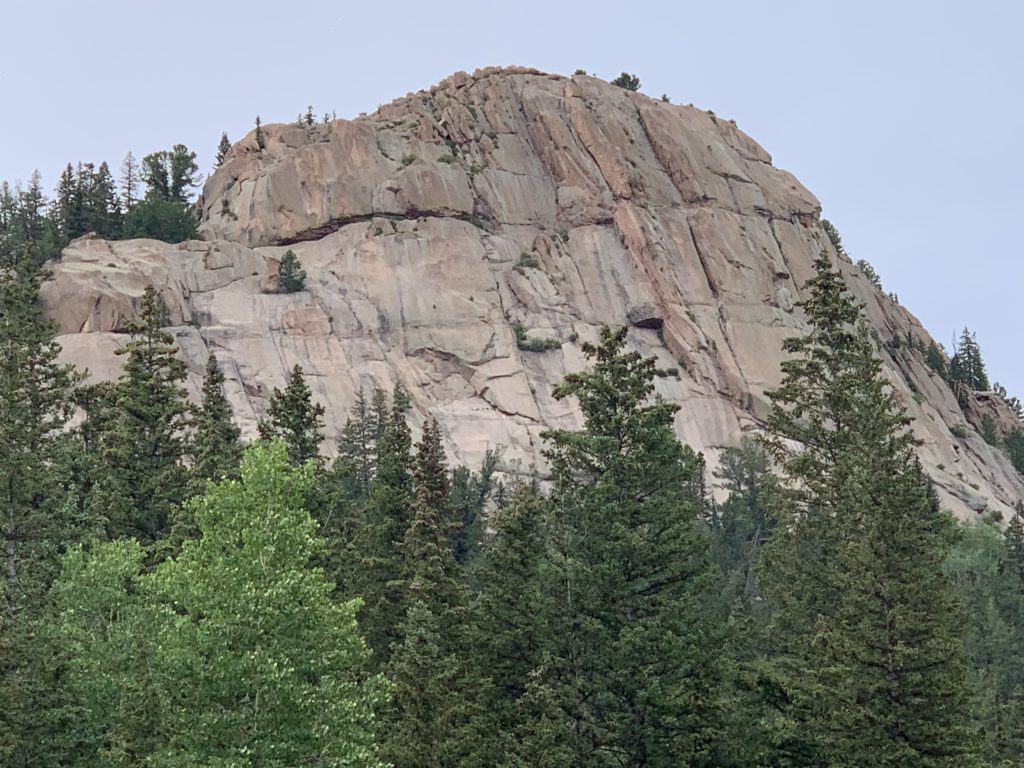
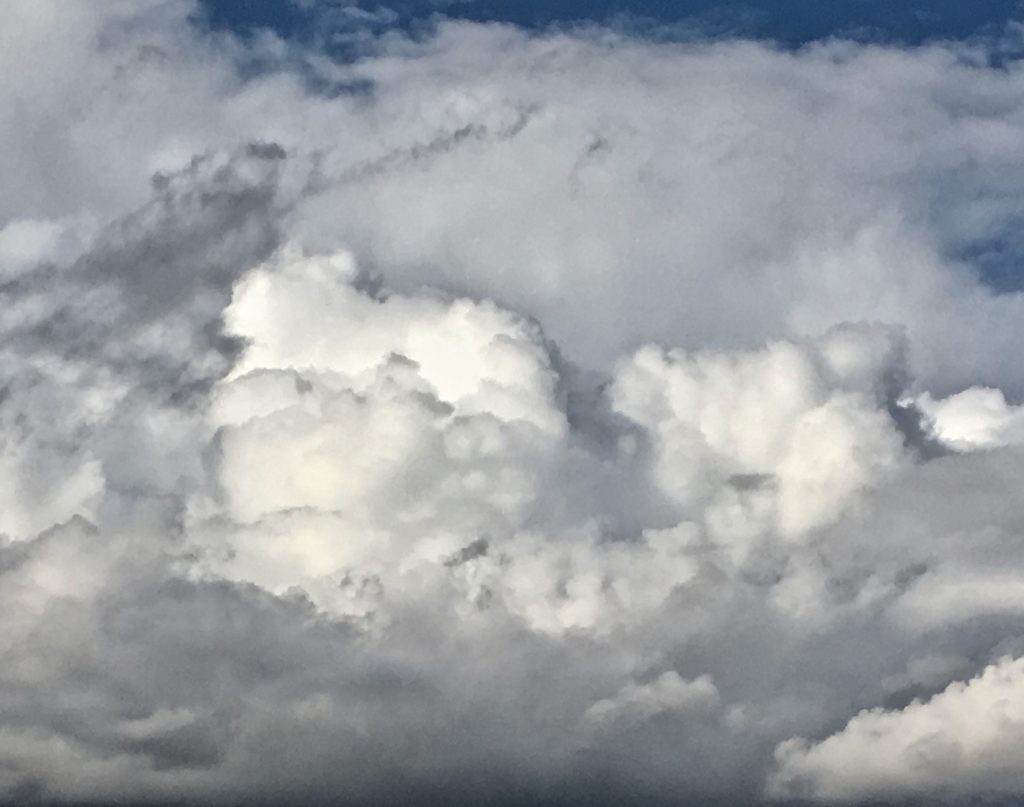
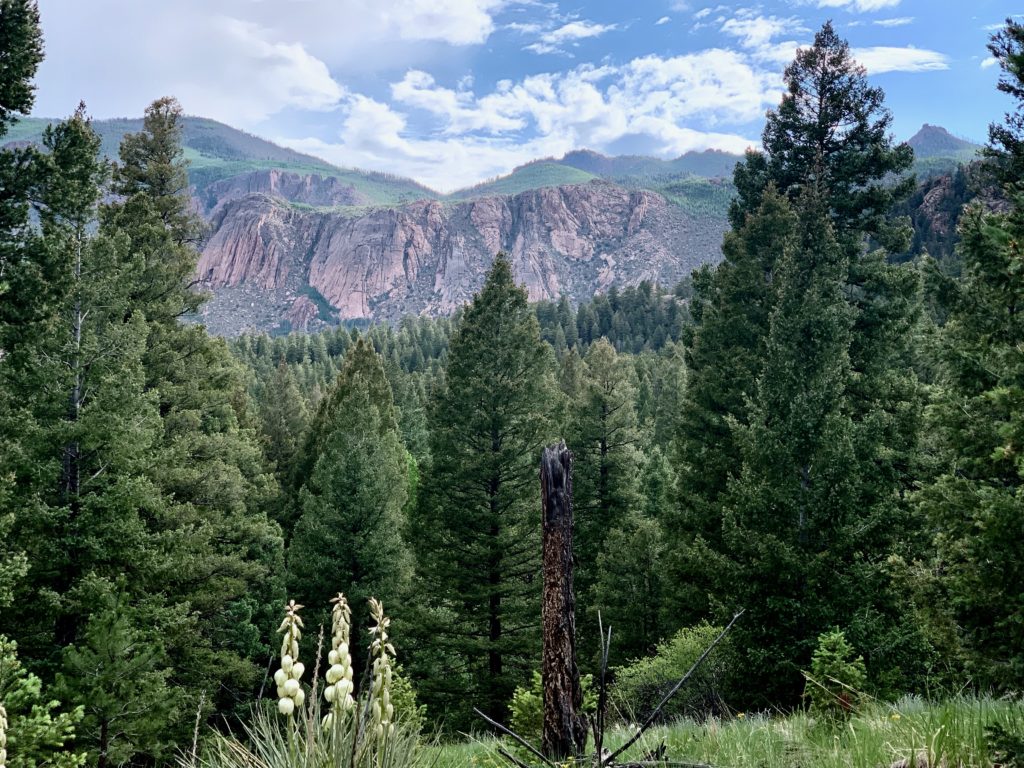
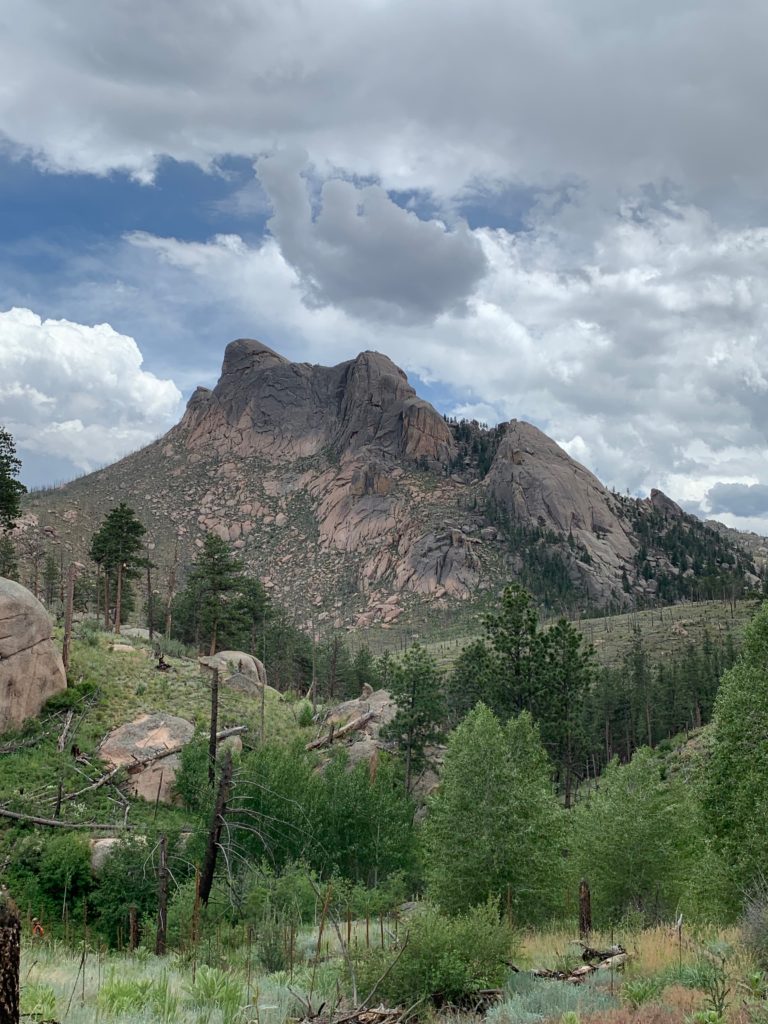
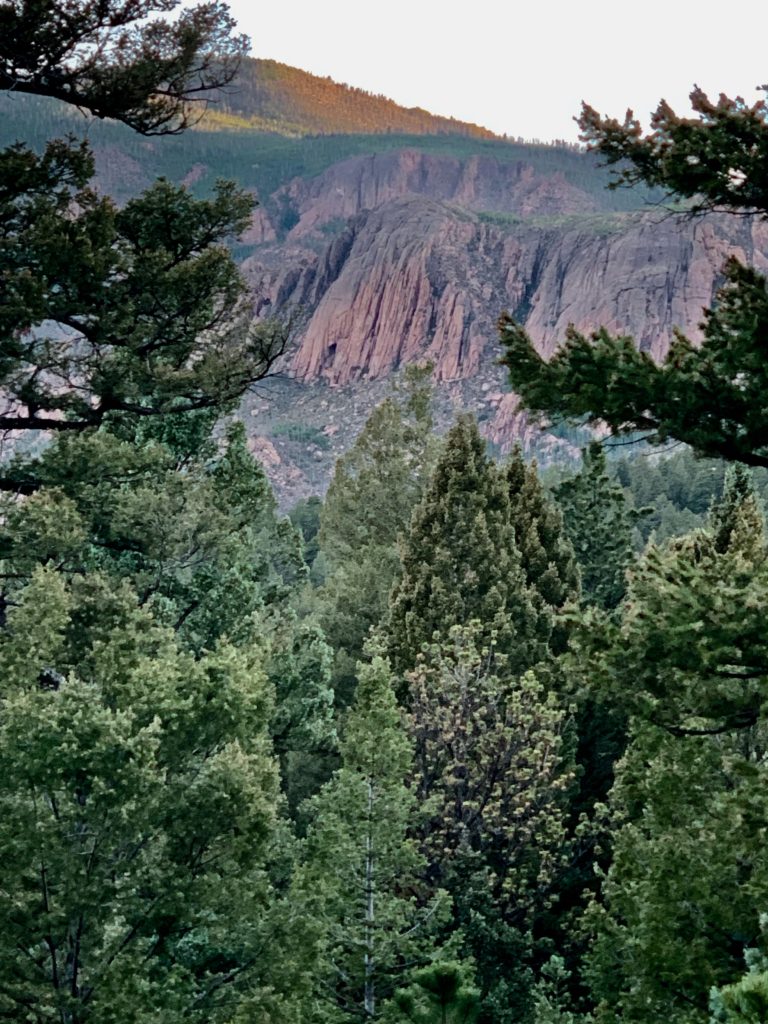
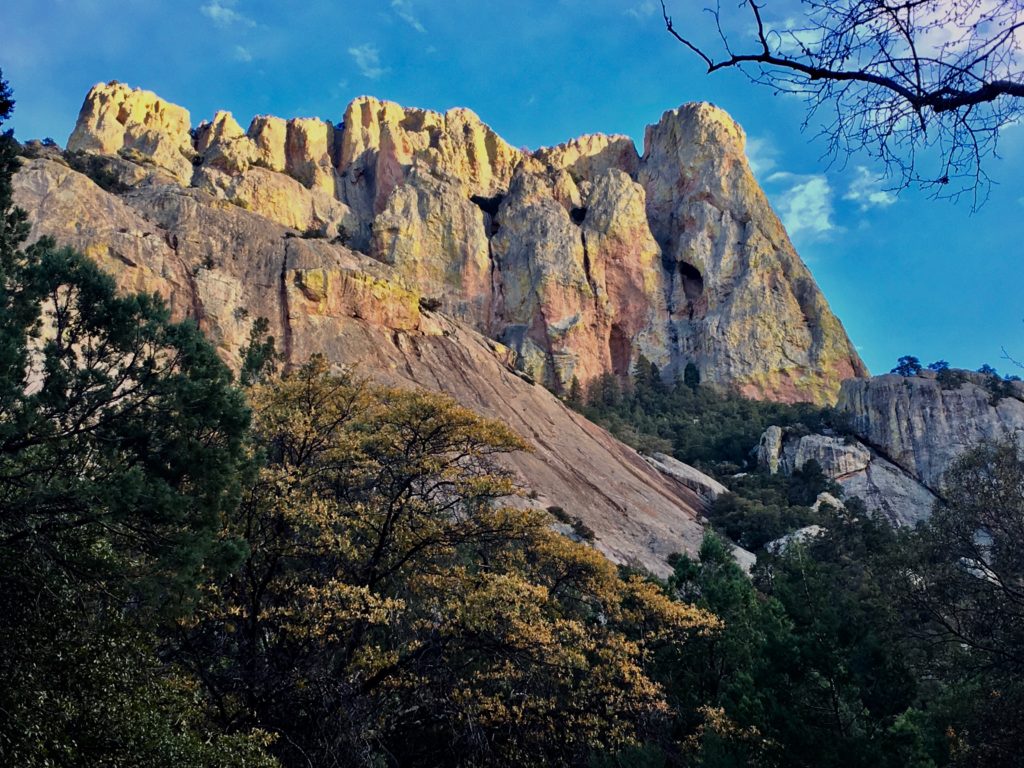
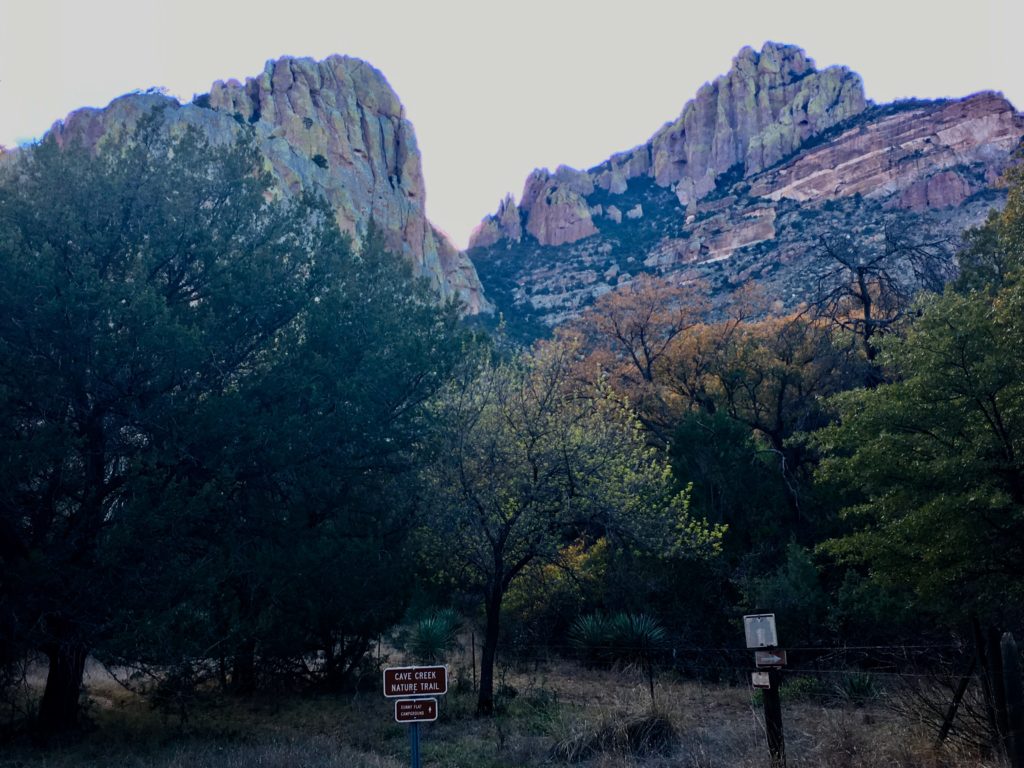
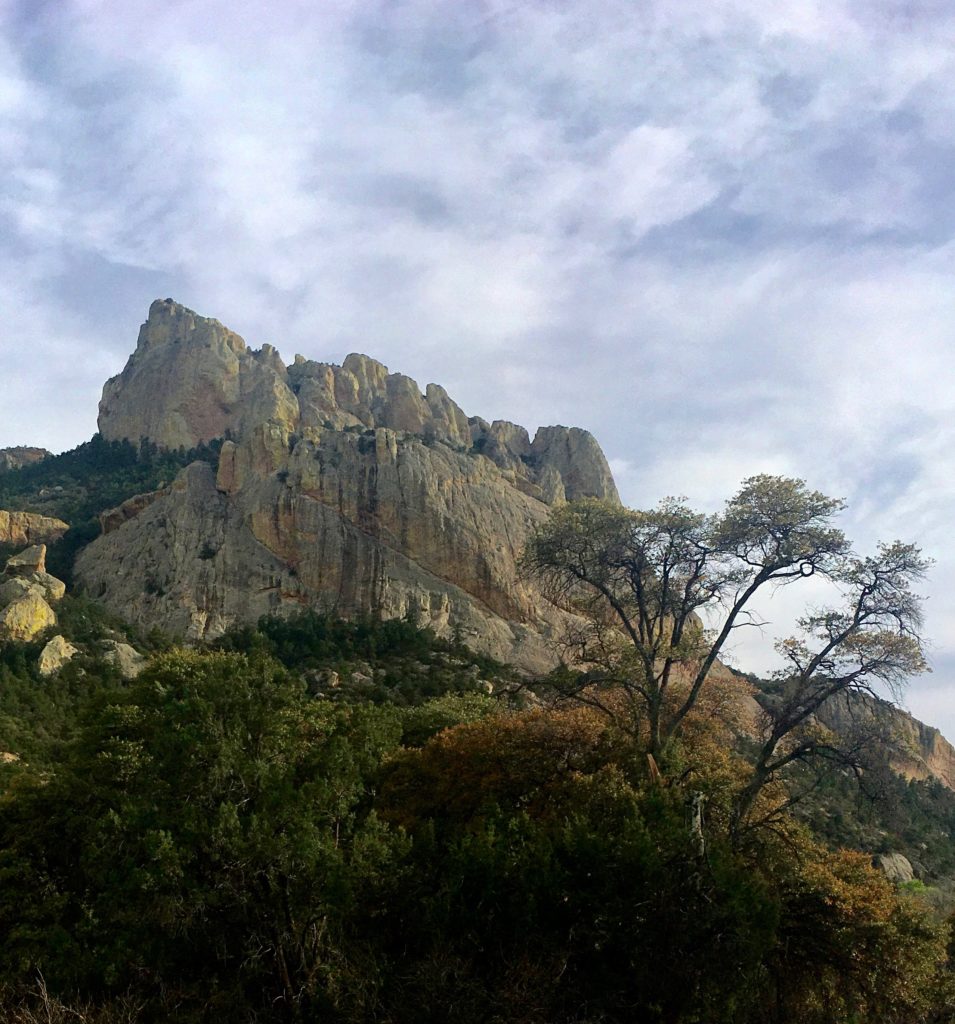
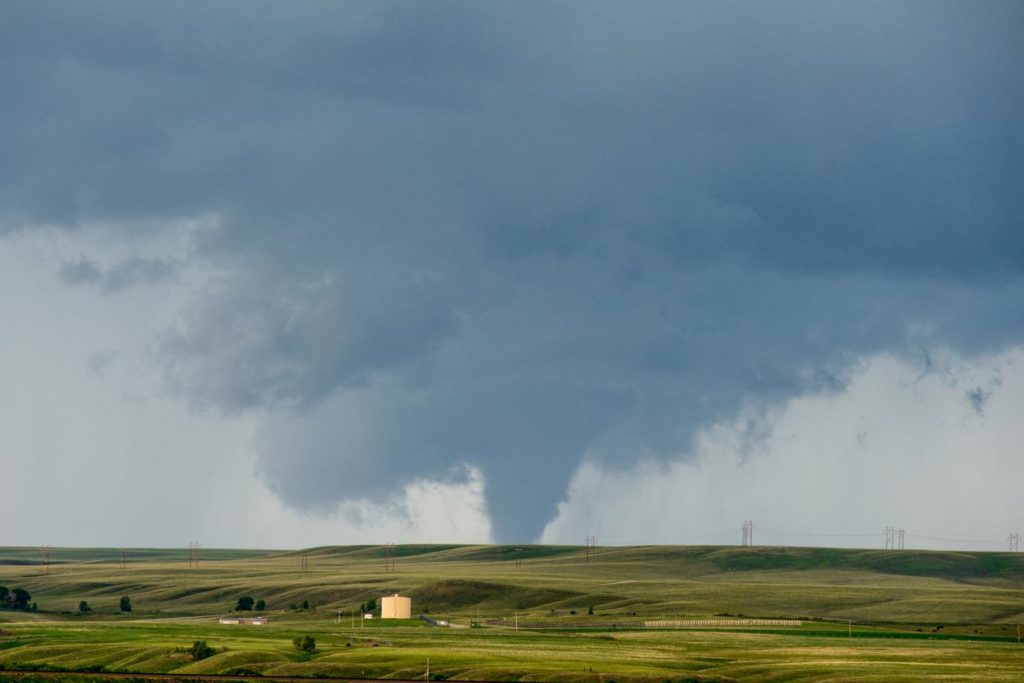
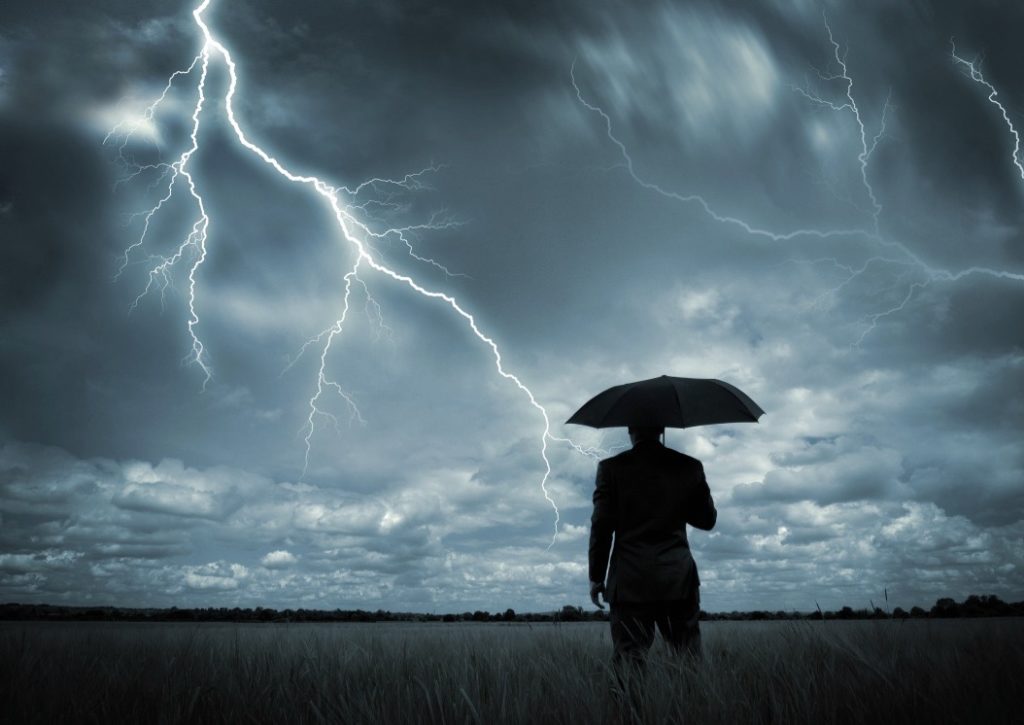
Thunder bounces off the granite back of Pikes Peak Mountain in Colorado rattling my camp and my bones. Lighting splinters the peace of cascading streams in the spruce and pine forest fringing the sheer cliffs and jagged trails of The Crags of Colorado.
Electrical storms in the highlands of central Colorado powerfully ricochet from rock to rock creating a cacophony so intense the area has been dubbed The Devil’s Playground.
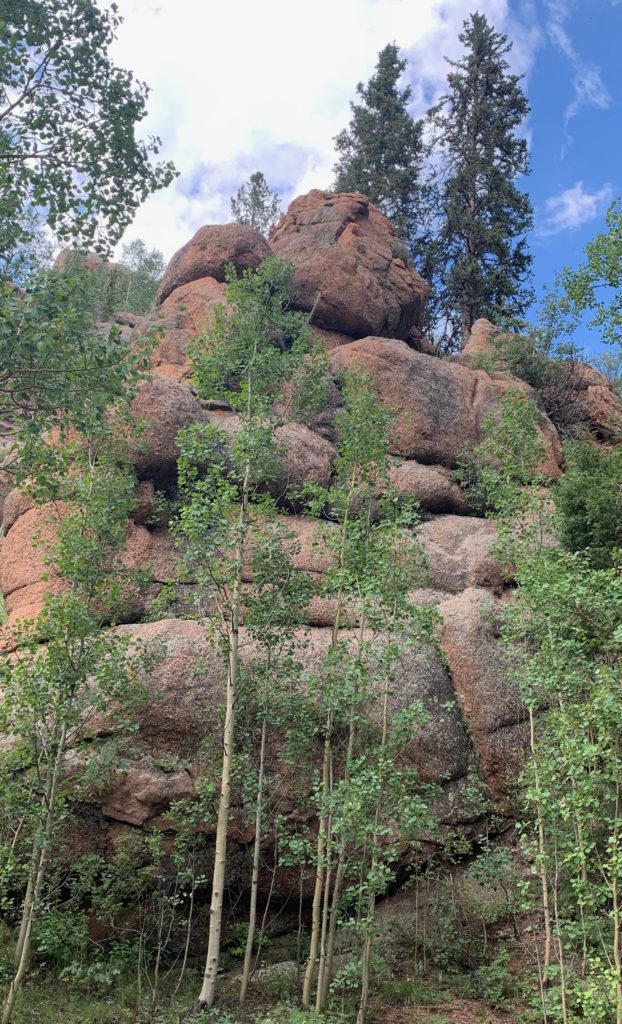
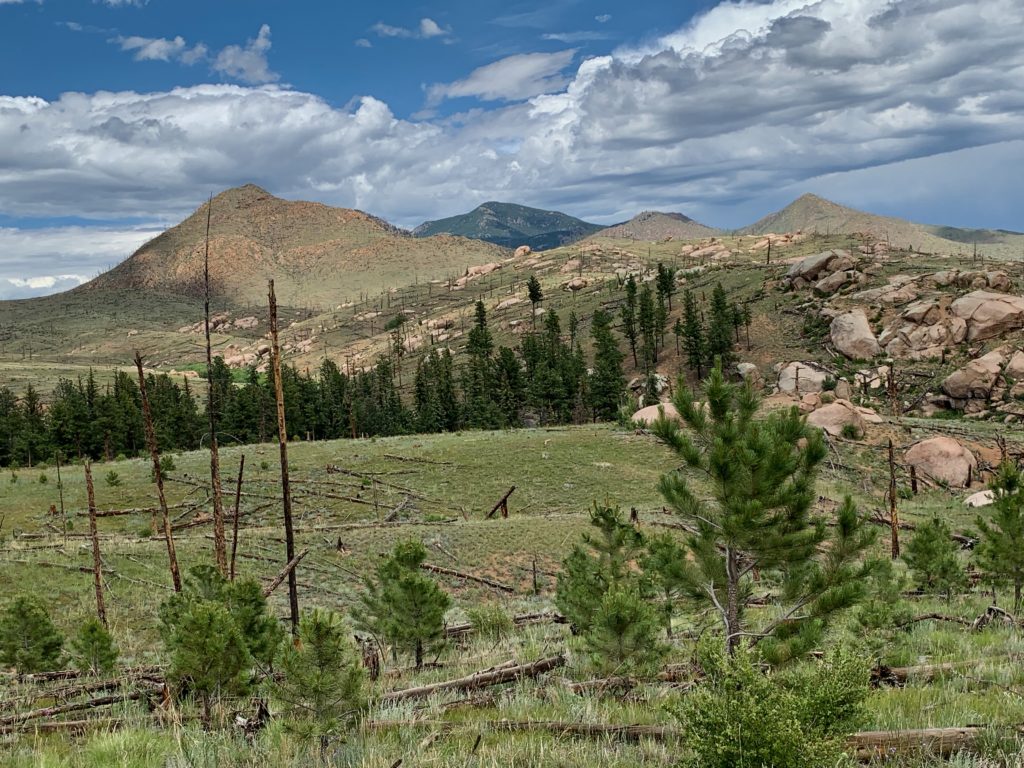
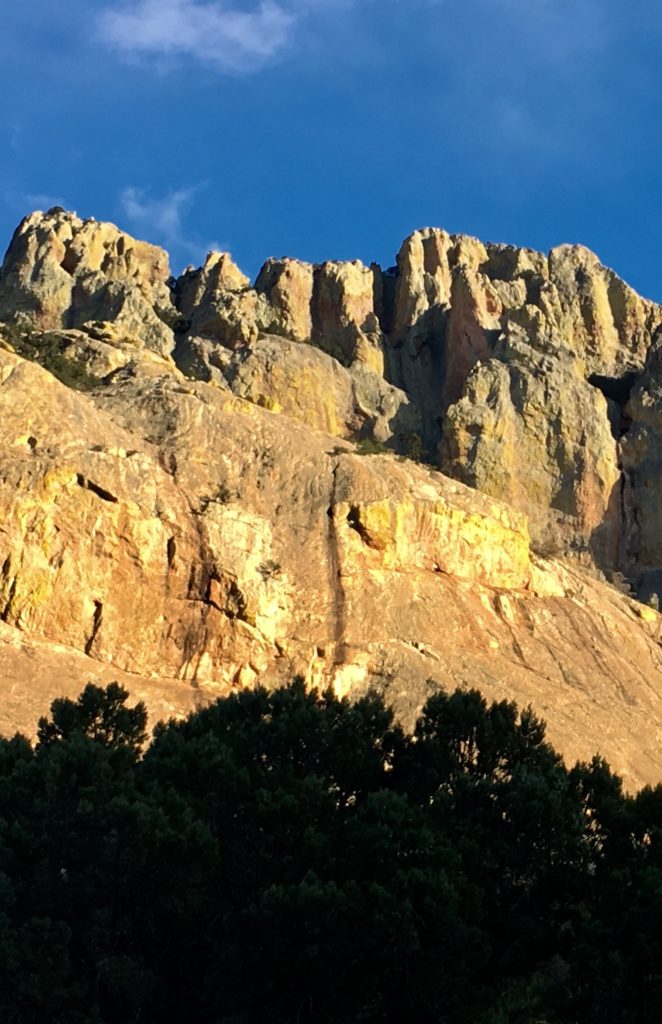
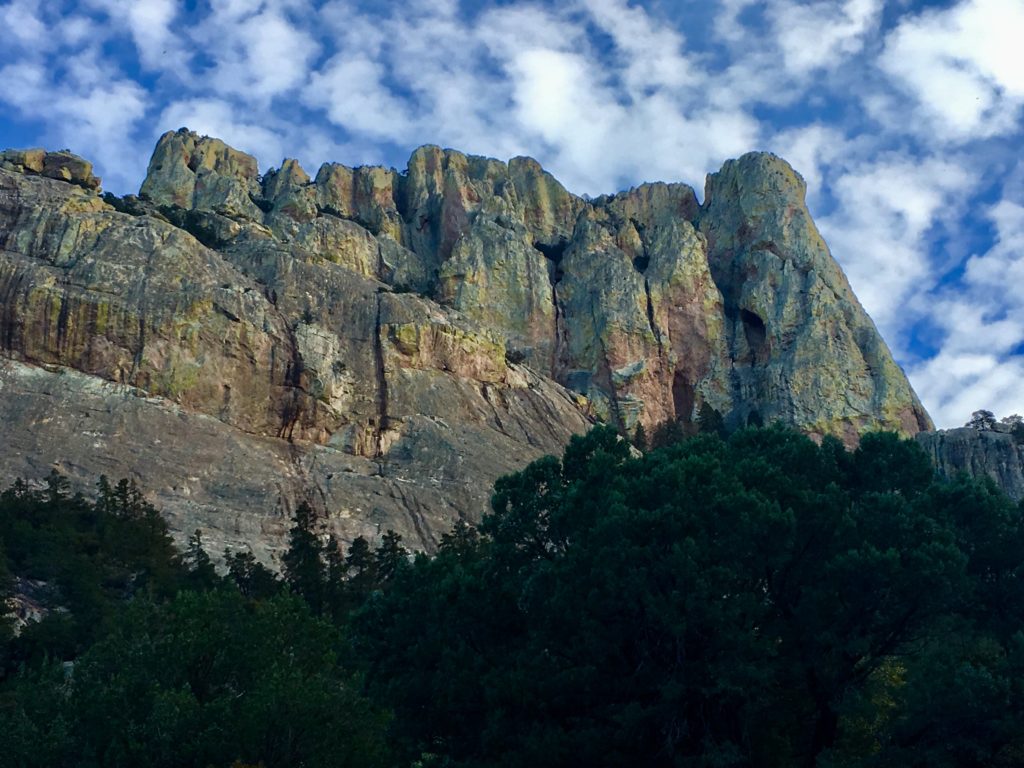
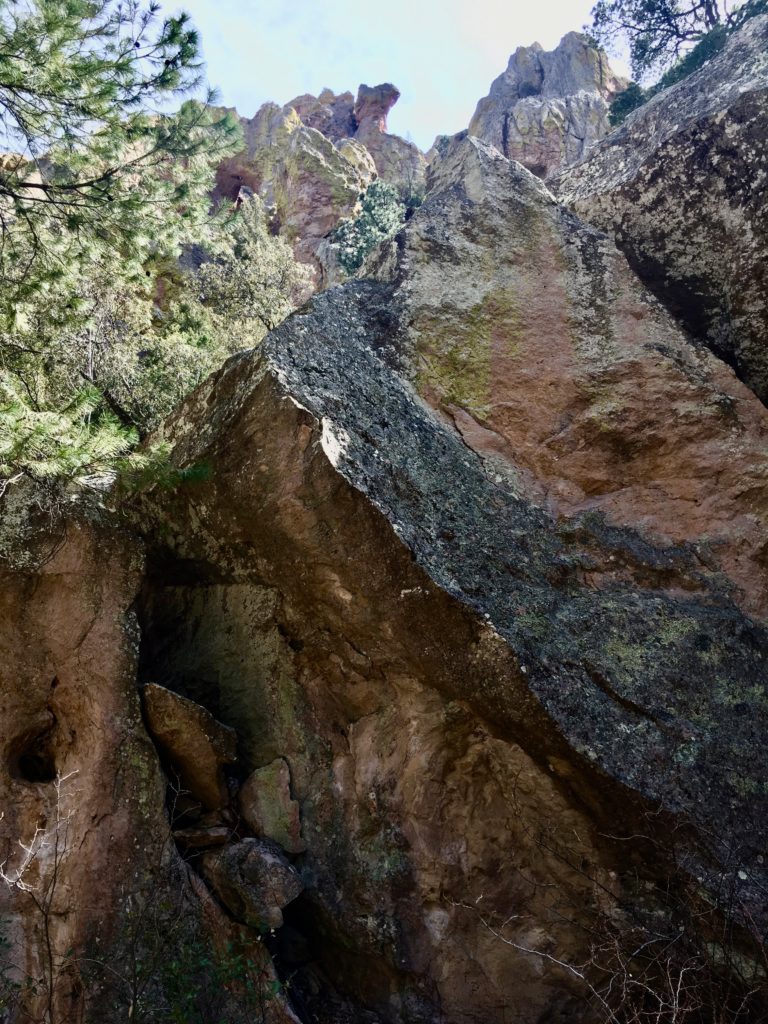
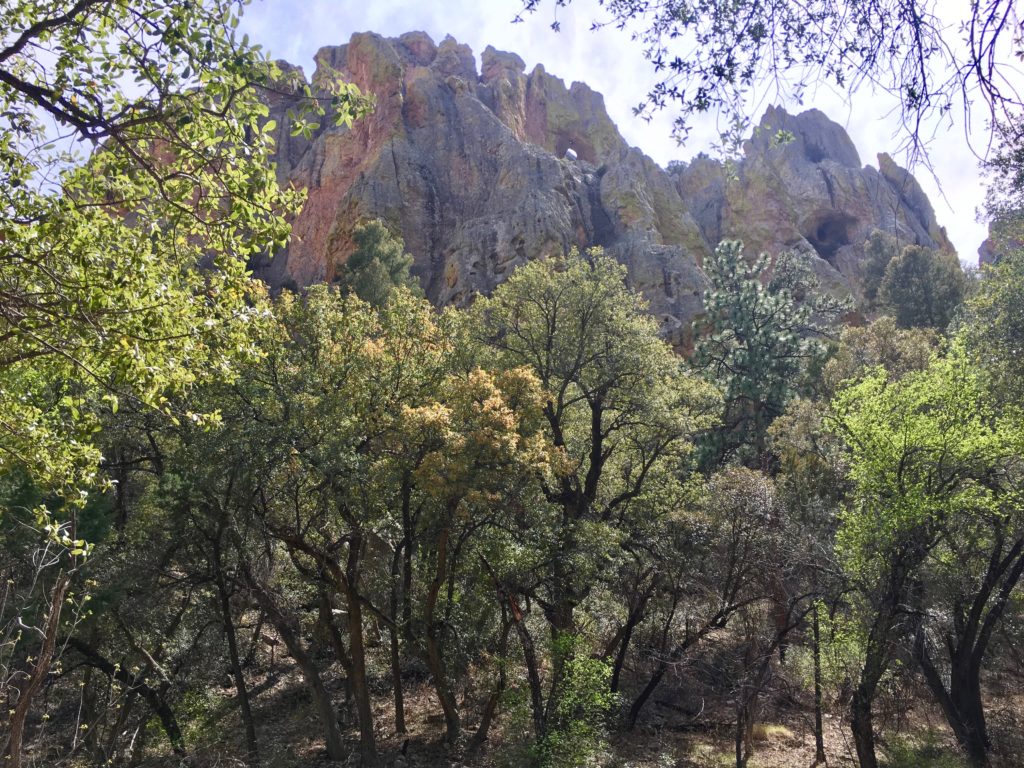
The northwest peak area has a reputation as the “wild side.” Life is steep and jagged near Ute Pass and can seem impenetrable with deep shadows, and massive, rounded boulders perilously eroded and impossibly stacked.
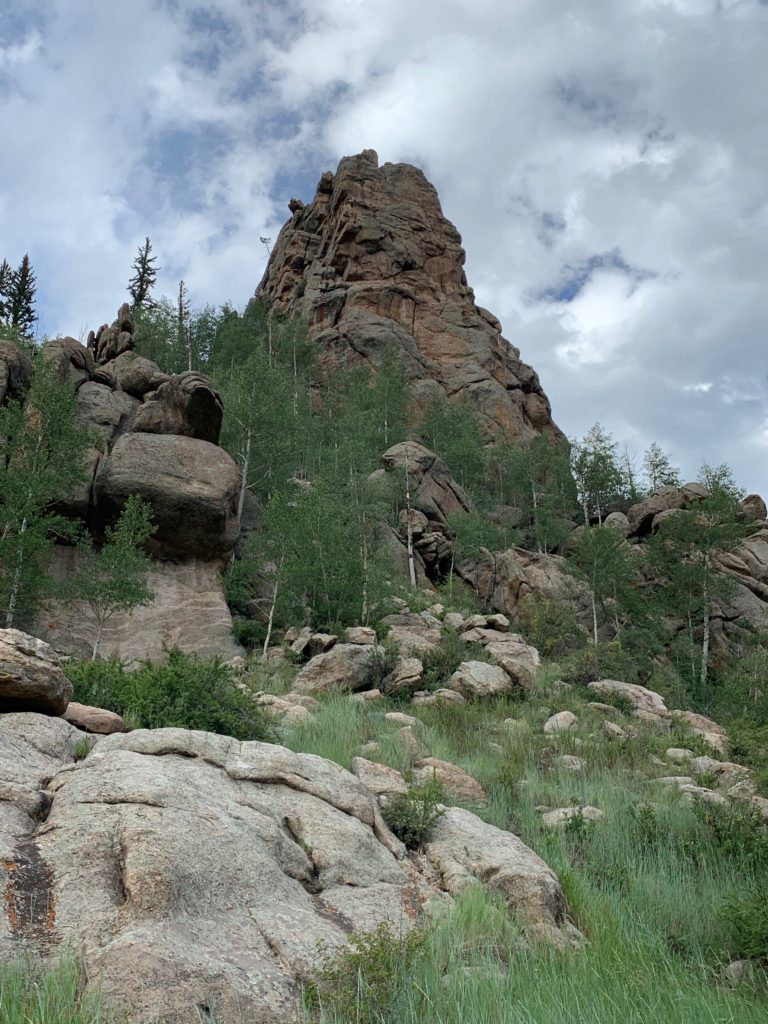
Storms That Make My Ears Ring
Thunder booms catch my breath in this precarious boulder balance. For just a breathe everything stops while instinct takes over.

Over the years I’ve tried to train mountain thunder as a Call to Prayer practice of many religions. There is typically a sound that indicates it’s time to stop life for a bit to pray and reflect.
Thunderstorms bouncing through the valley is my cue. Instinctually it immediately focuses all my senses in the moment to breathe, assess, then lean into it in the deep peace, trusting all is well. If I actually need to take action that direction will come in the calm too.
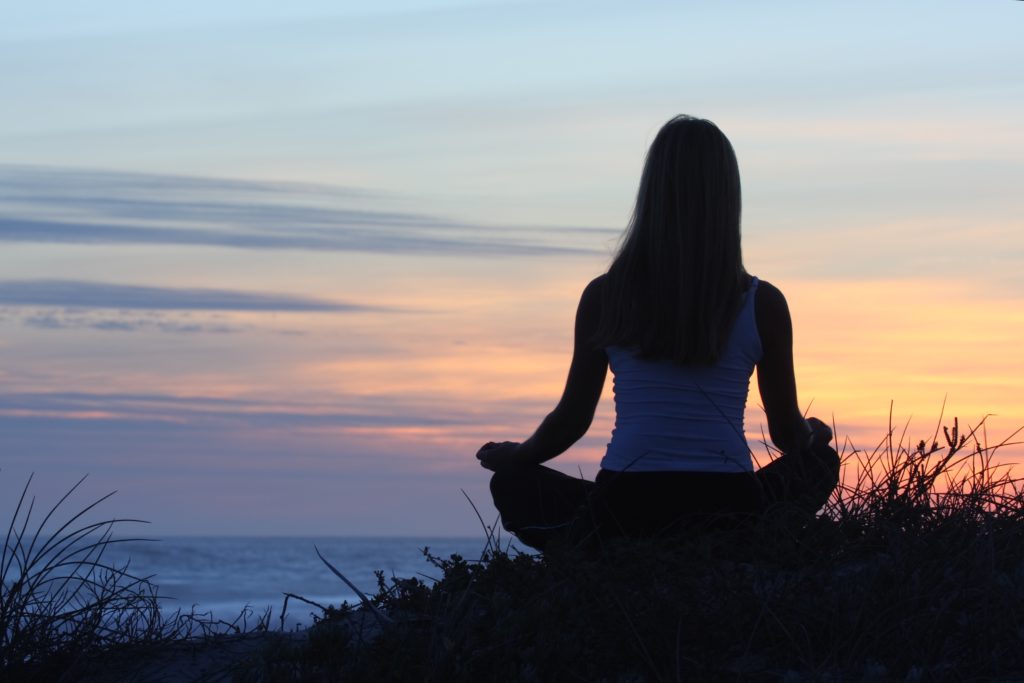
Typically my best strategy is to get to shelter, relax, and ride it out. In a hyper-aware state, it can be difficult to chill out. That’s where meditation practice pays off with a conditioned response, releasing lovely biochemicals that lower heart rate and respiration, and clear and center the mind – l
That deep, meditative peace floods my being, allowing me to be present with whatever is going on – even if just for a moment. It’s big medicine for my body, not to mention mind and spirit, especially if I’m nervous.
Home Sweet Home
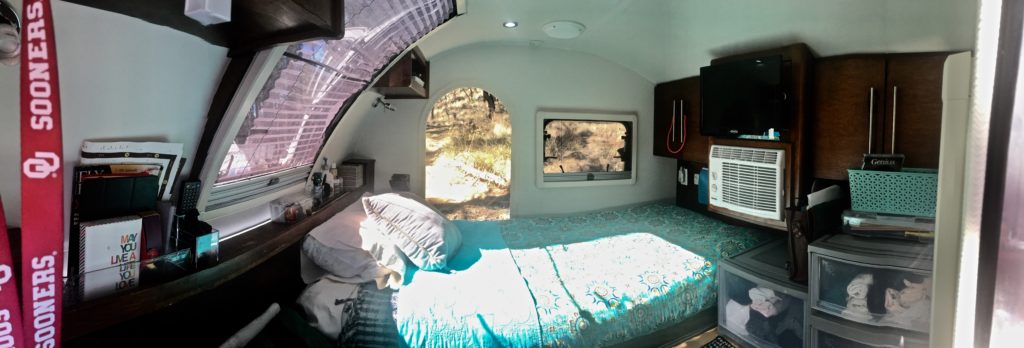
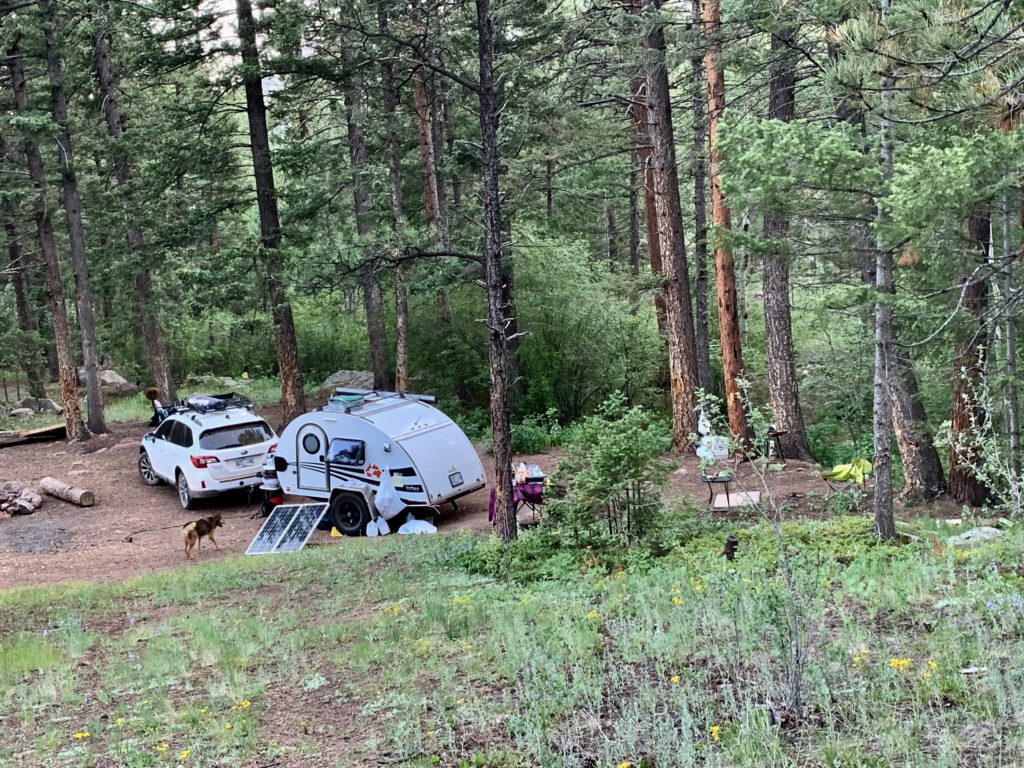
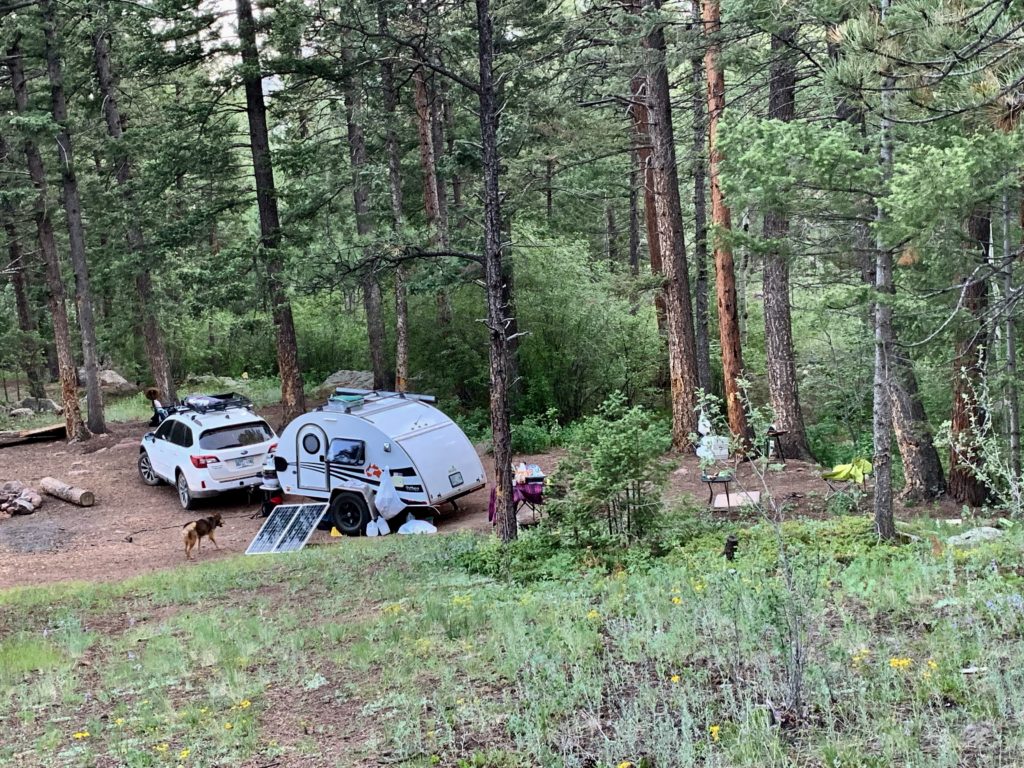
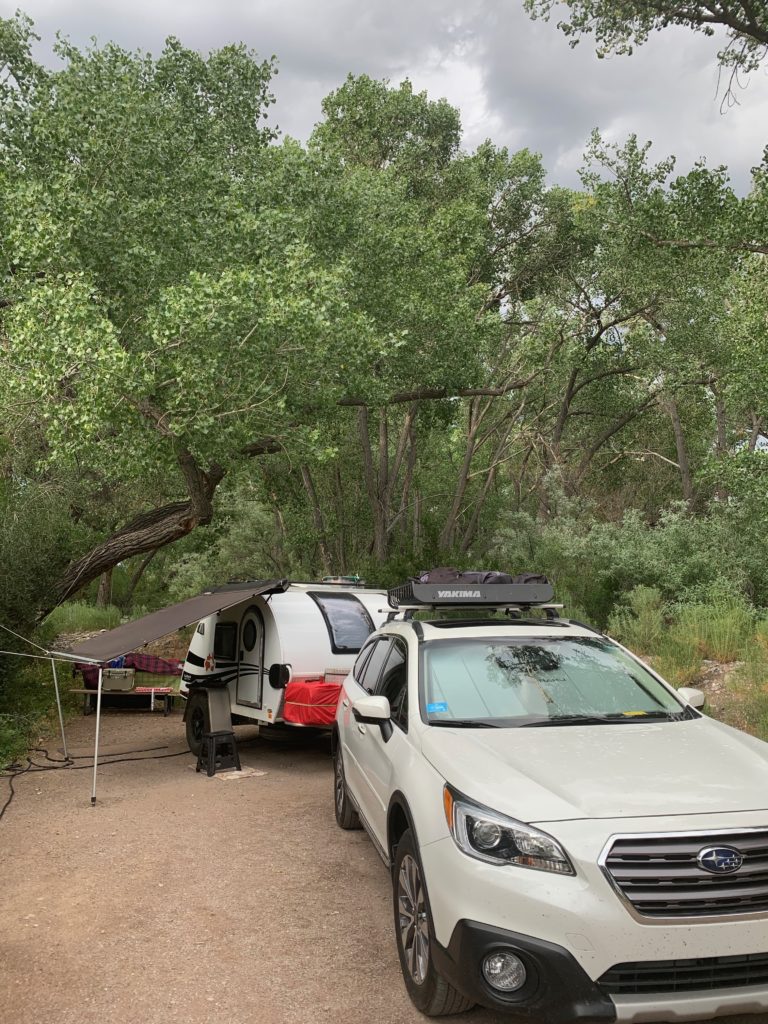
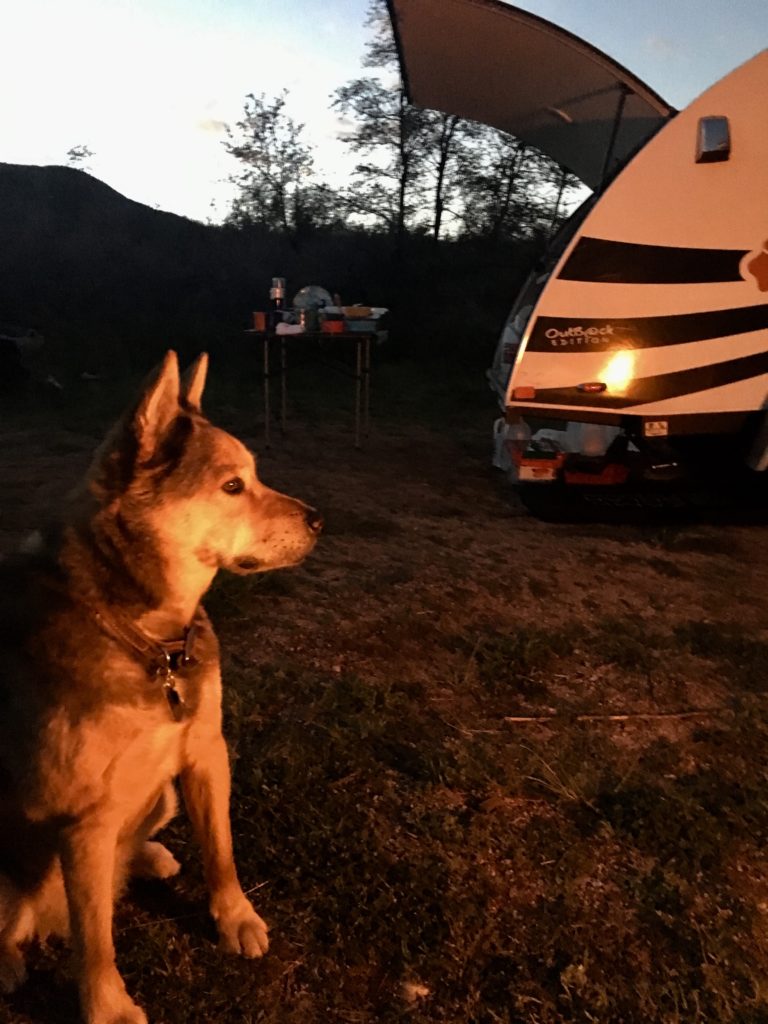
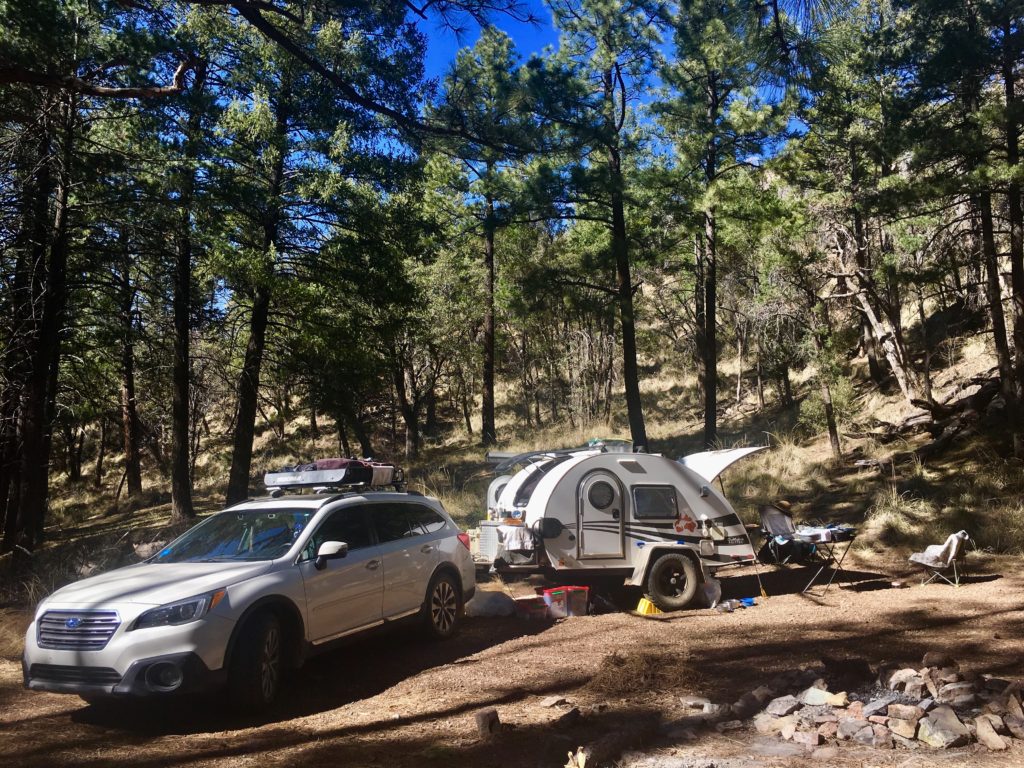
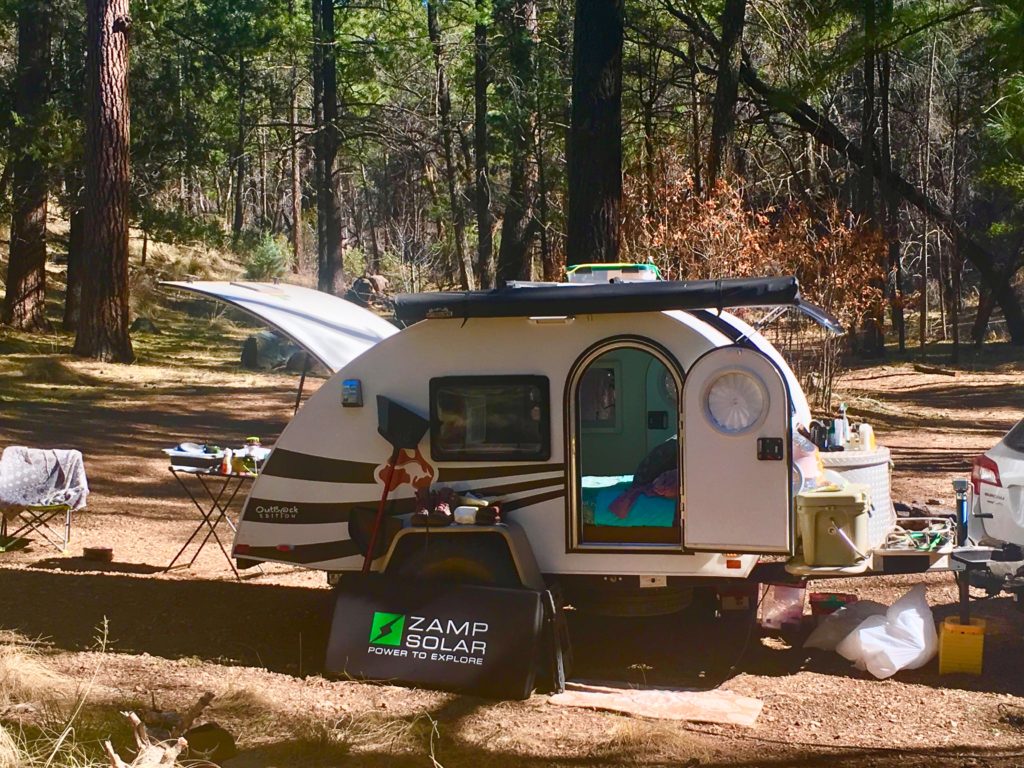
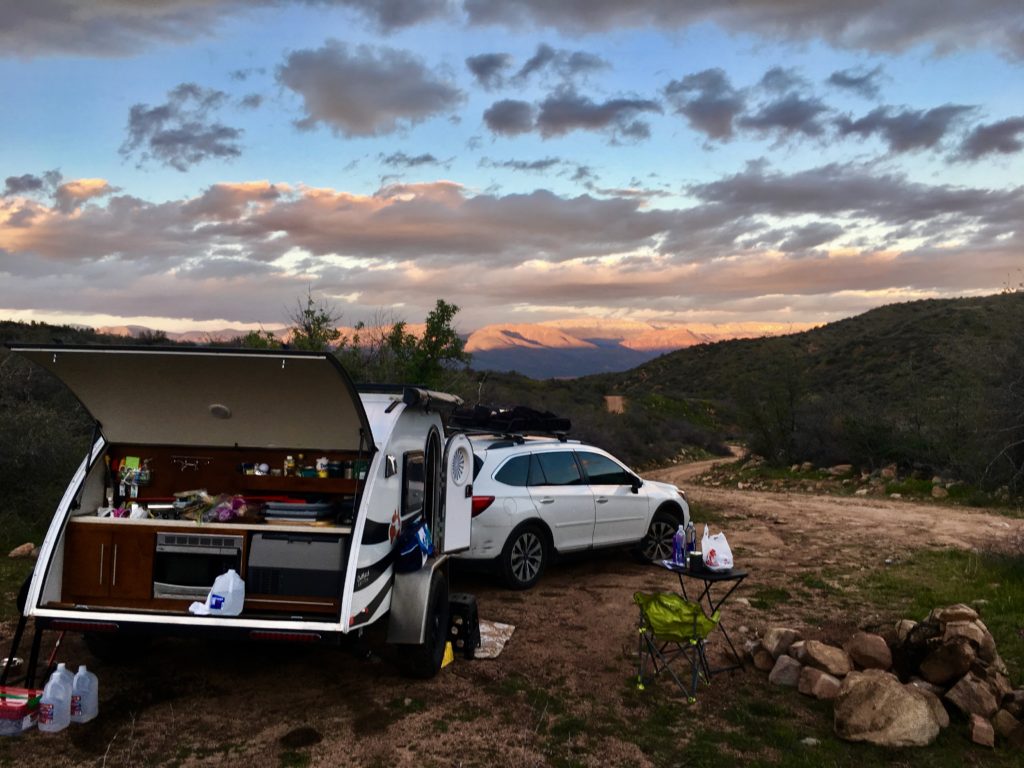
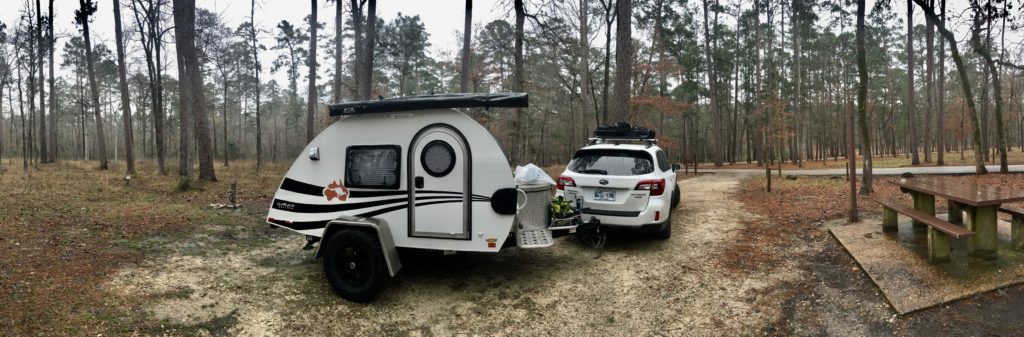
A tiny but sturdy, and cozy teardrop trailer is also prime real estate in intense mountain thunder, lightning, and rain. E
Built for Rugged, Small Rigs and Tents
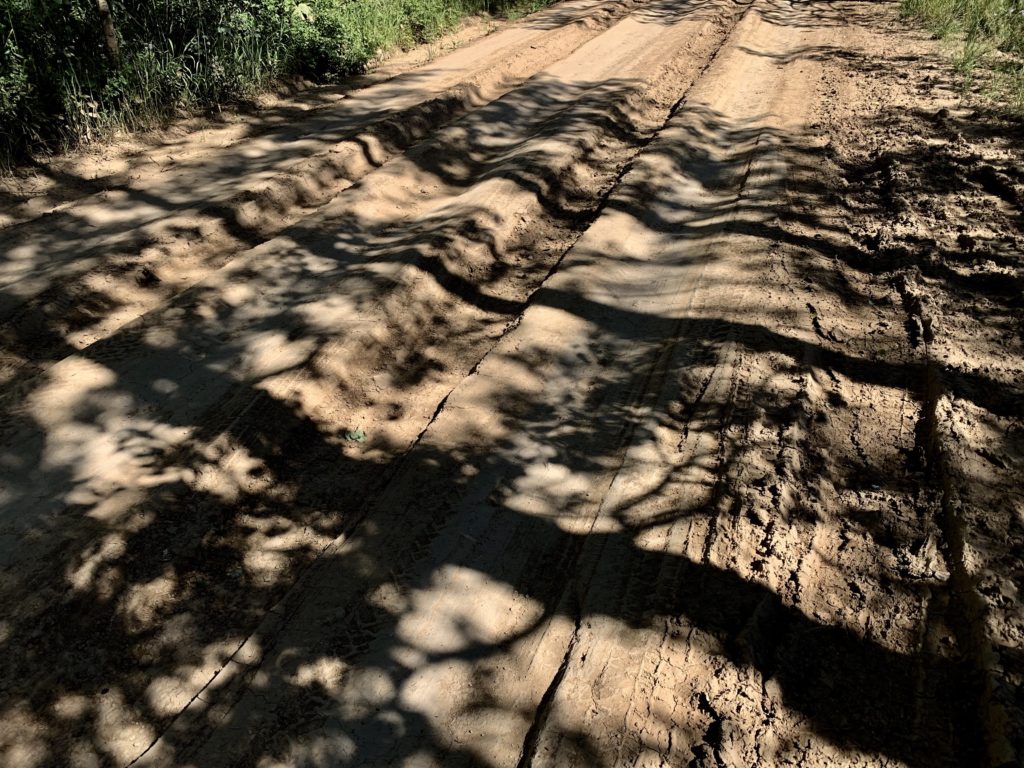
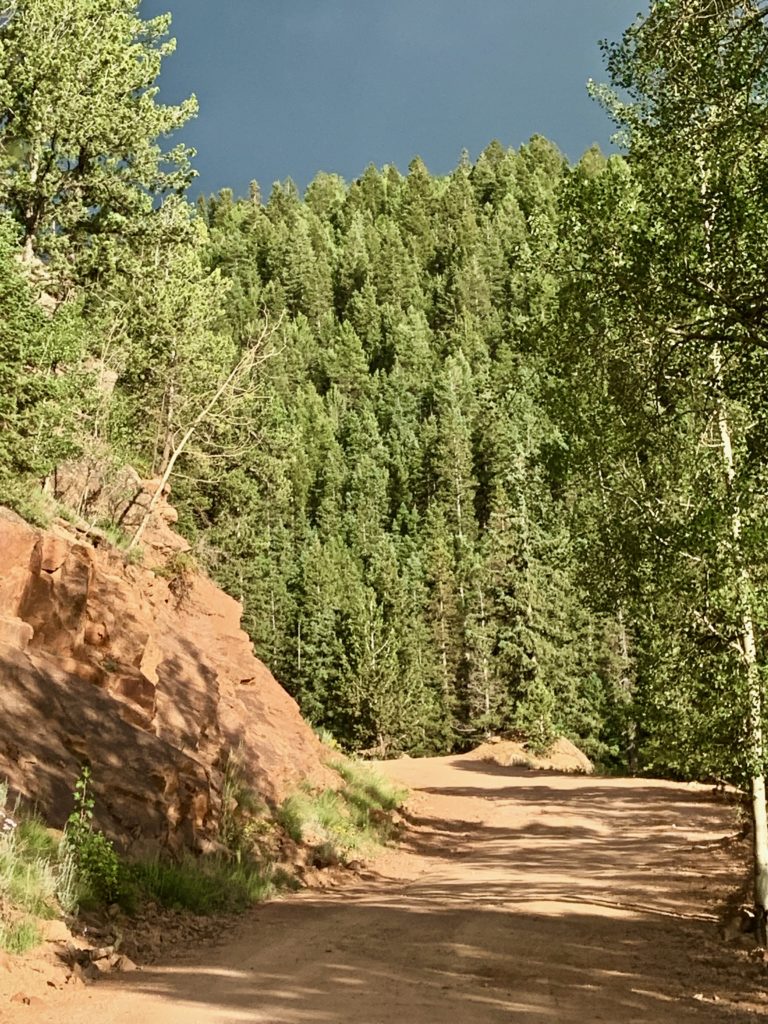
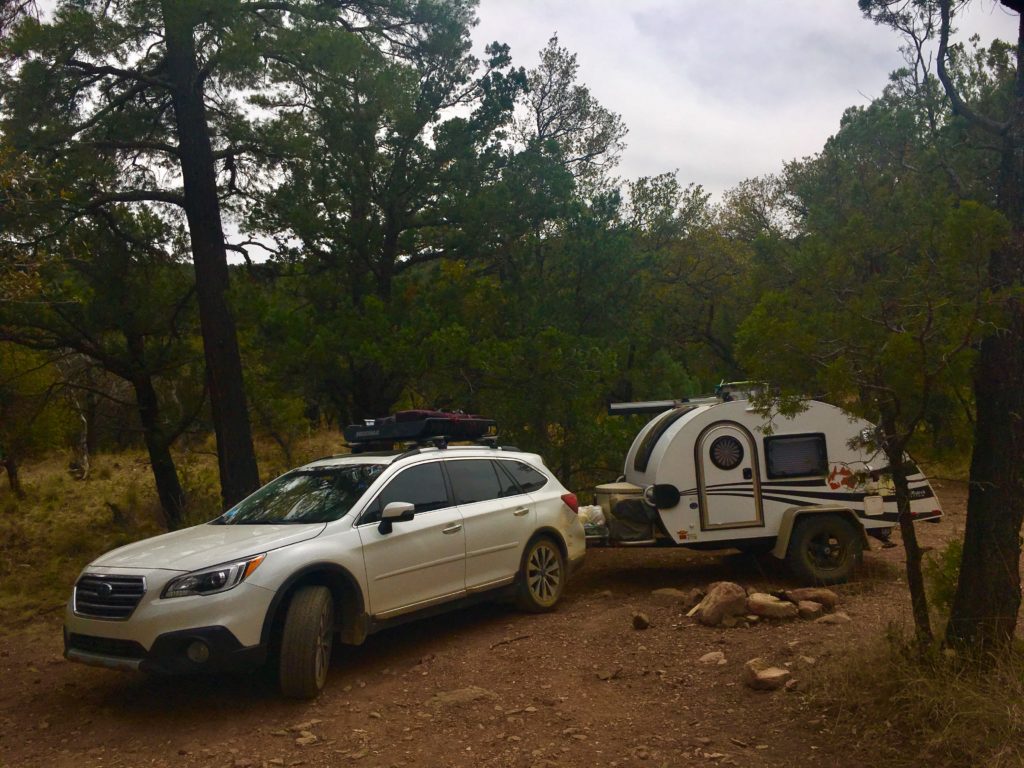
Like most places I love, big rigs will have a difficult go on the rough road to the national forest’s Crags Campground. There are only 3.5 miles of barely passable narrow, rough forest road, but it can take 30 minutes of
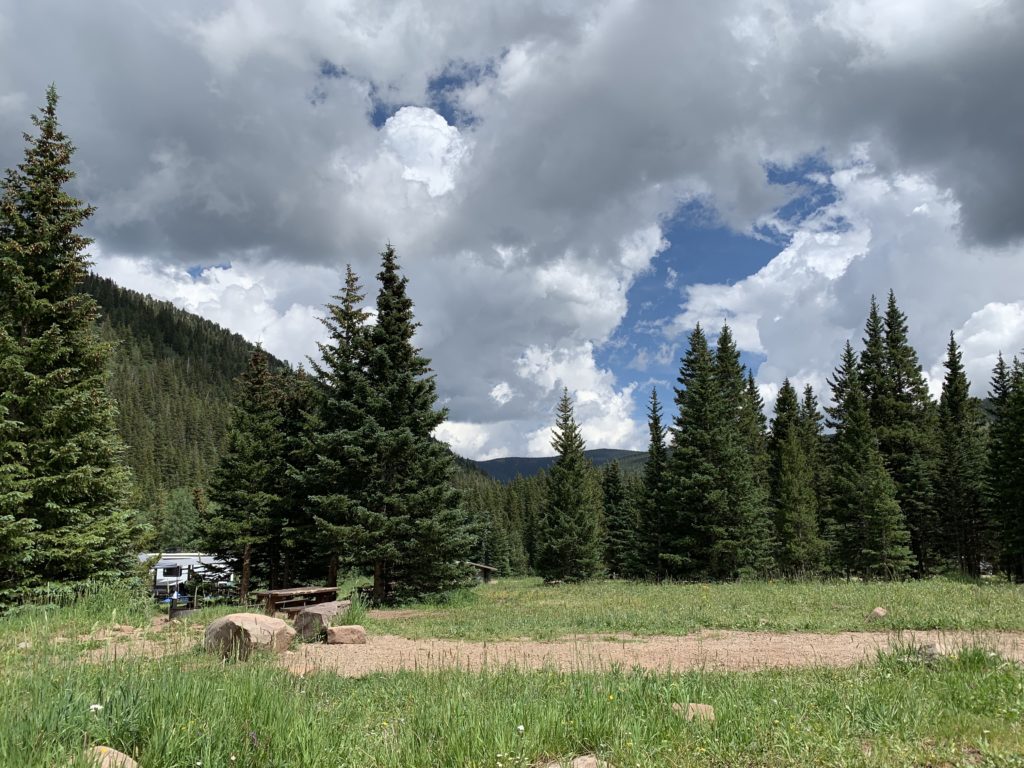
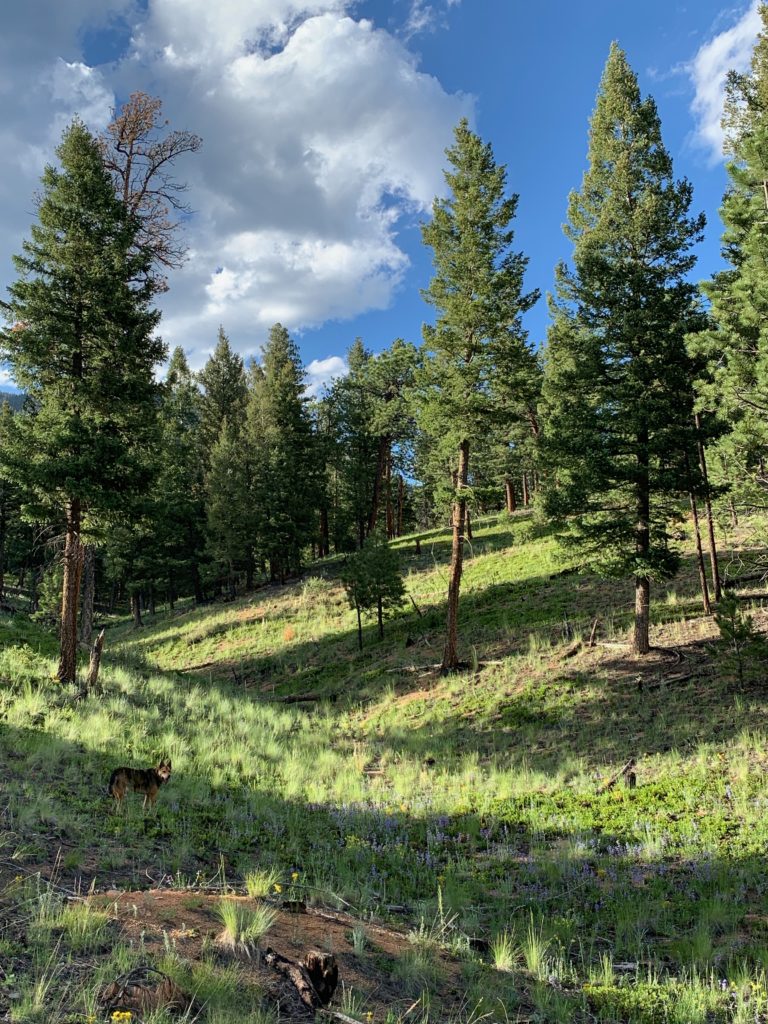
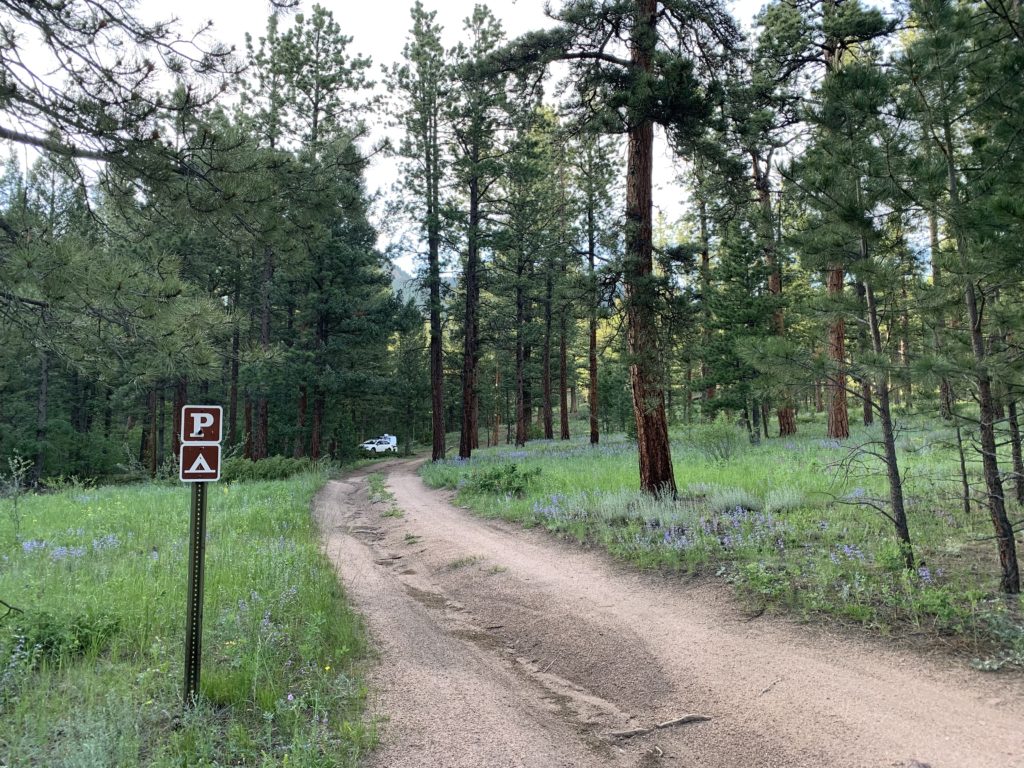
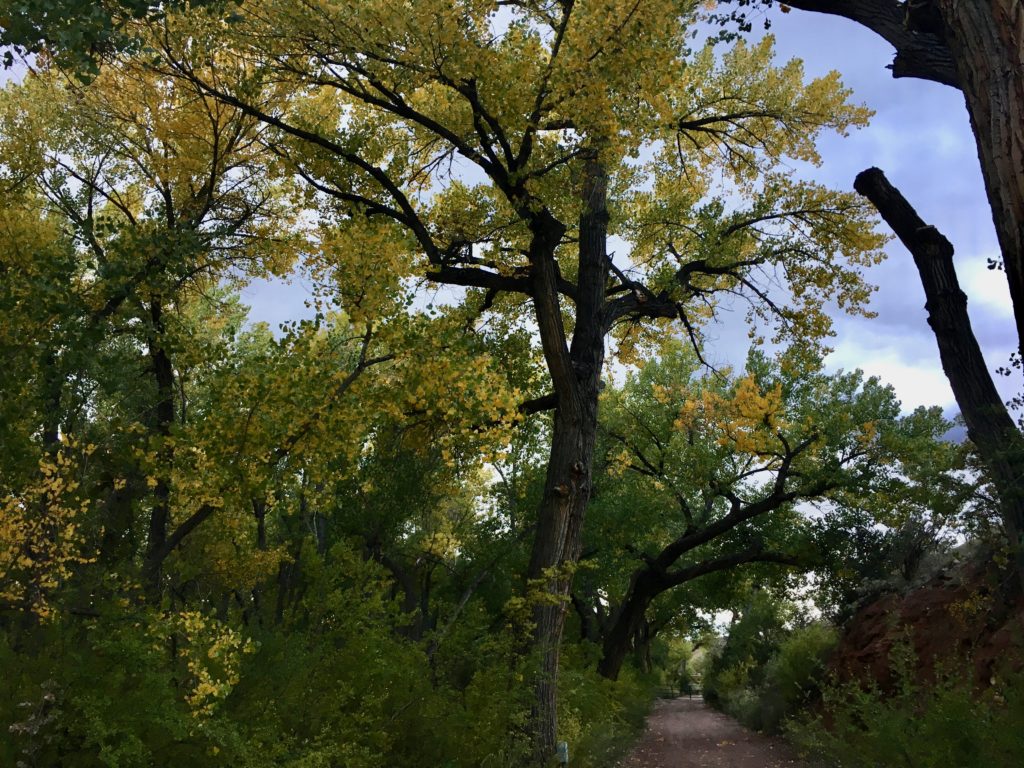
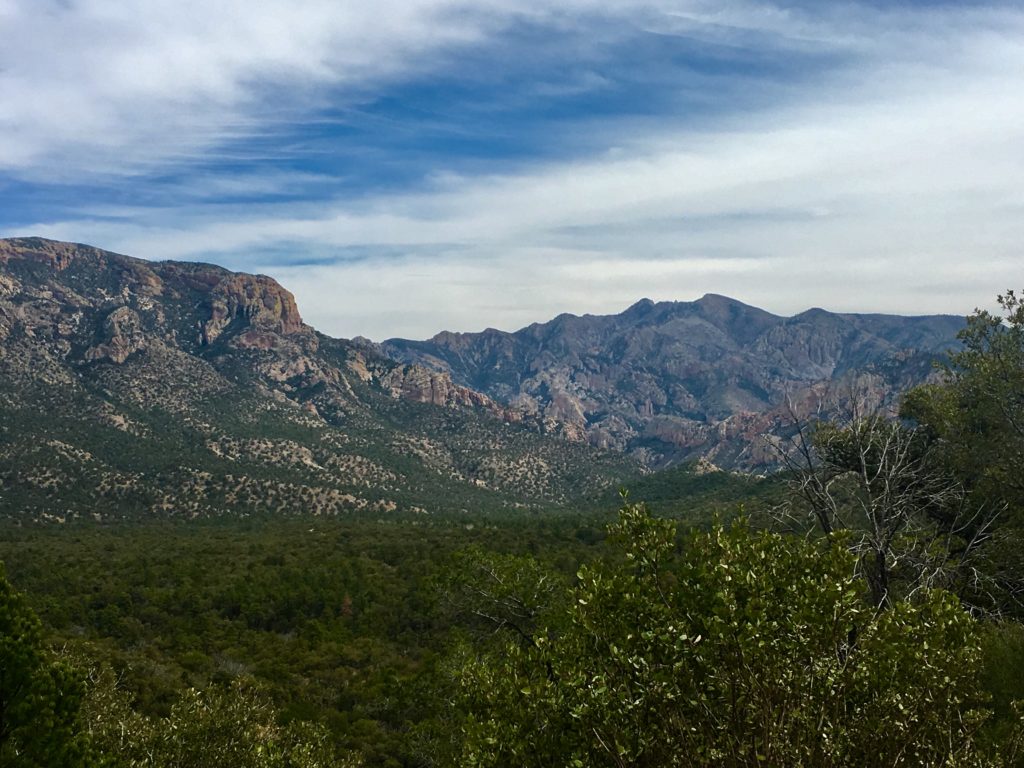
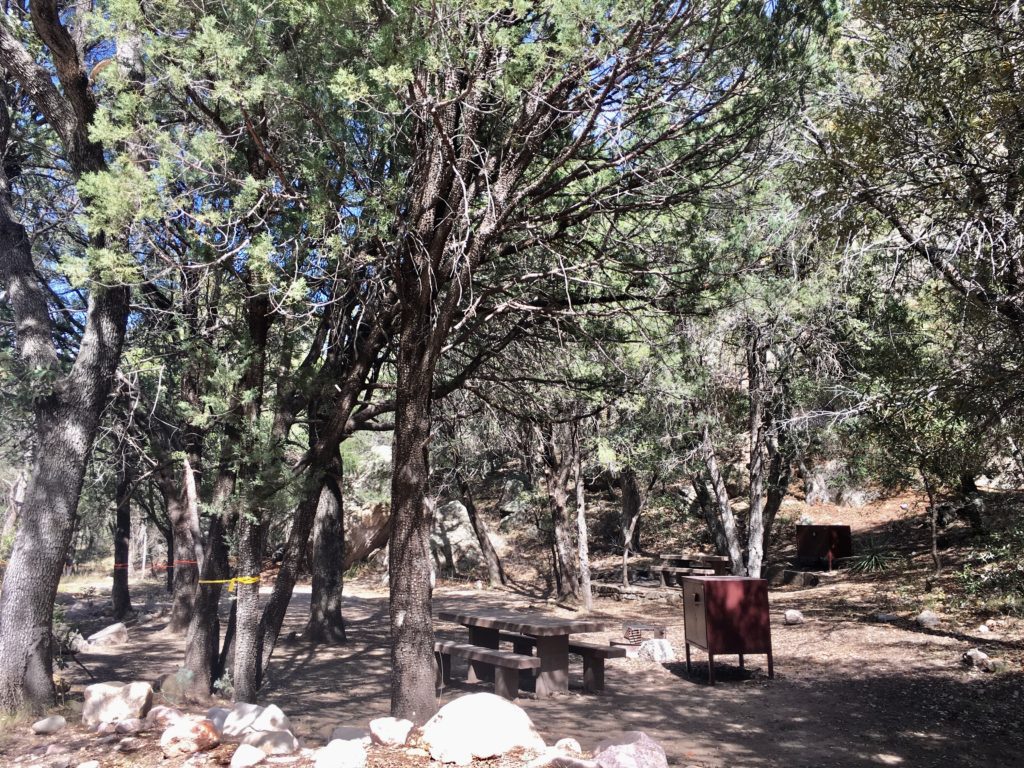
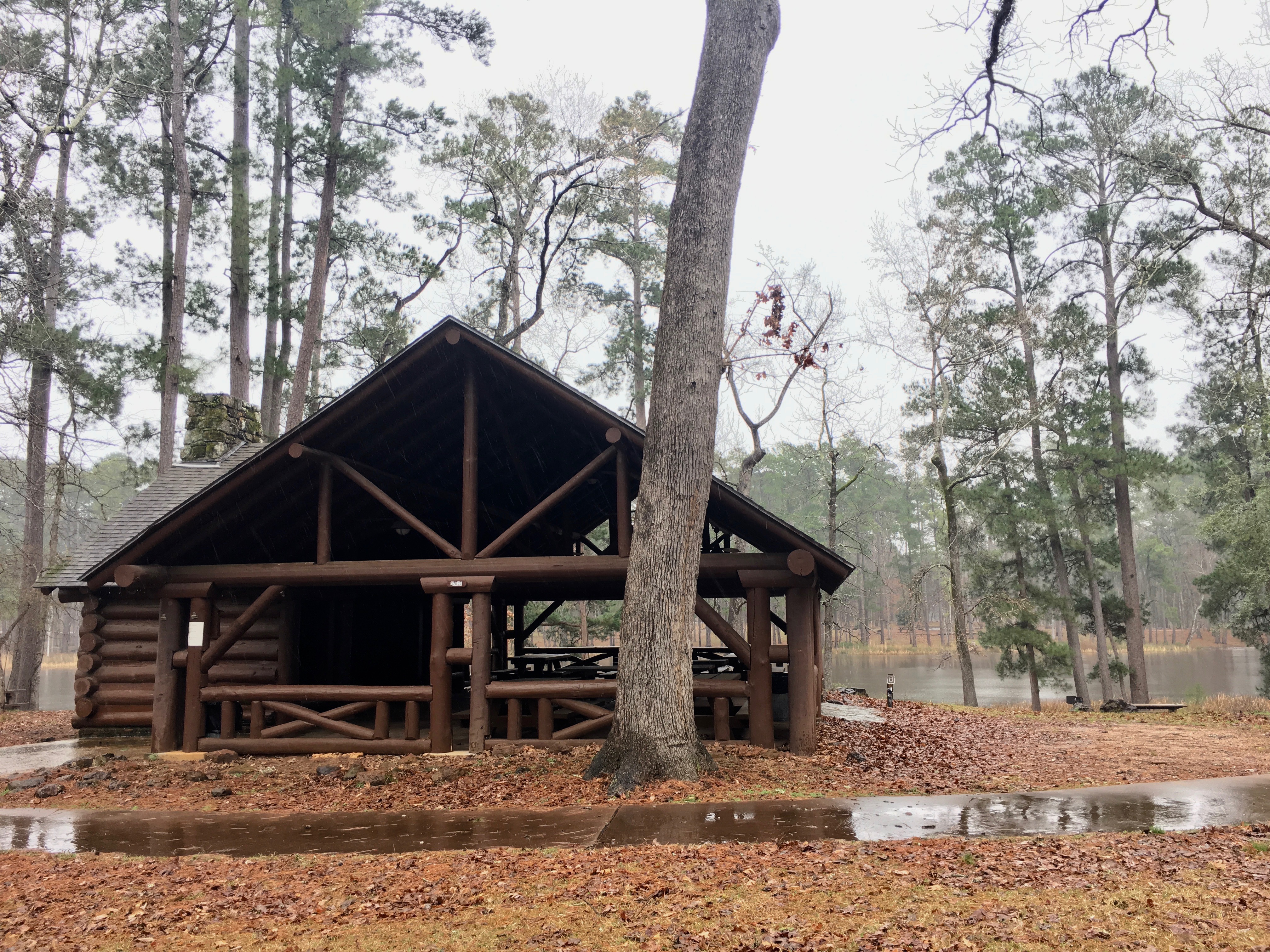
Mixed pine, spruce, and aspen forest shades a primitive, rustic campground tucked into a portal deep into the western slopes of Pikes Peak National Forest.
Sites are large, spacious, and relatively private, especially on the ends and outside edges of the grounds.
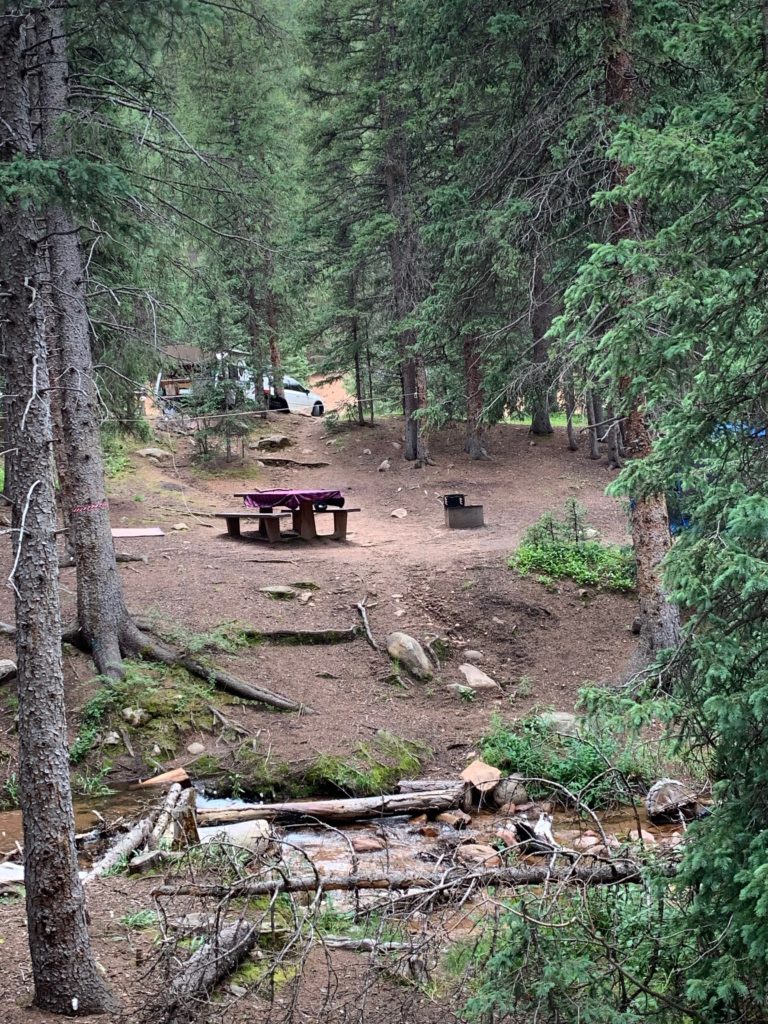
Terracing helps level tent sites on the steep terrain and camp may have two levels like a two-story house. There are a few meadow camps as well, but not as much shade. The sun is intense at almost 10,000-foot altitude.
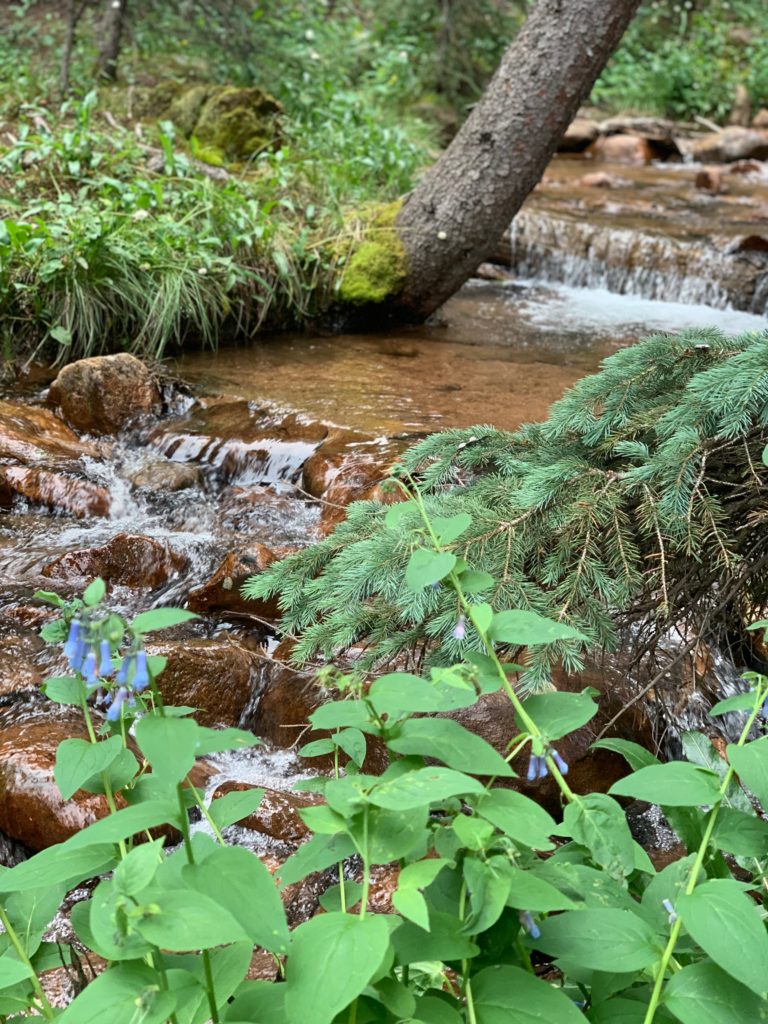
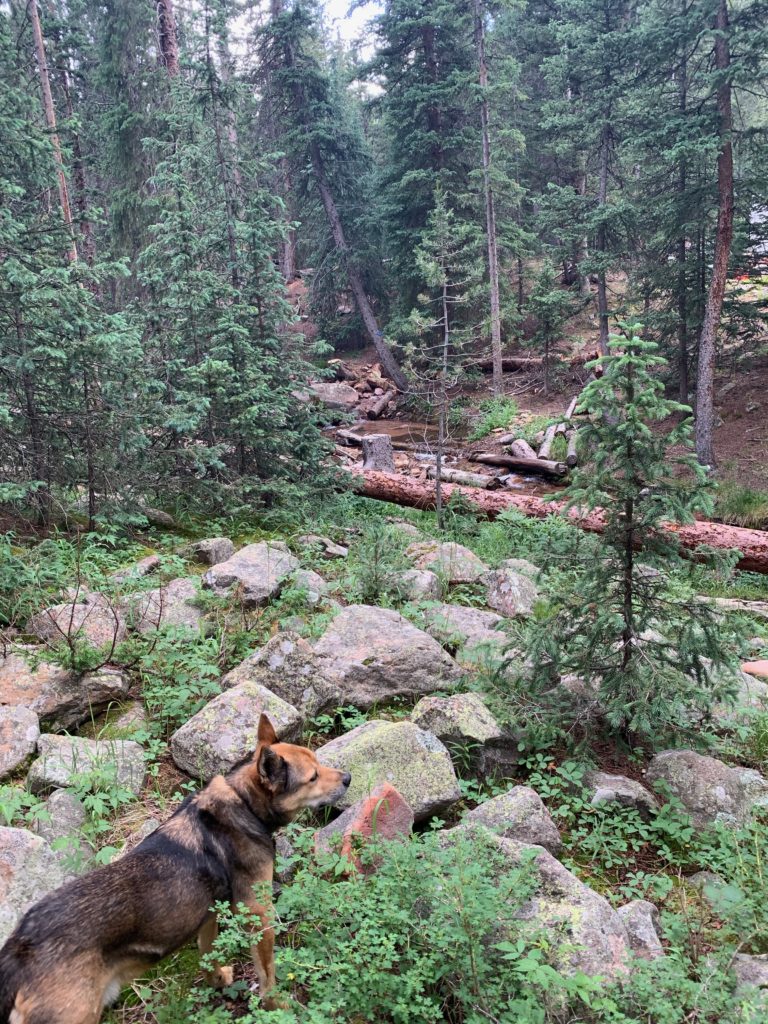
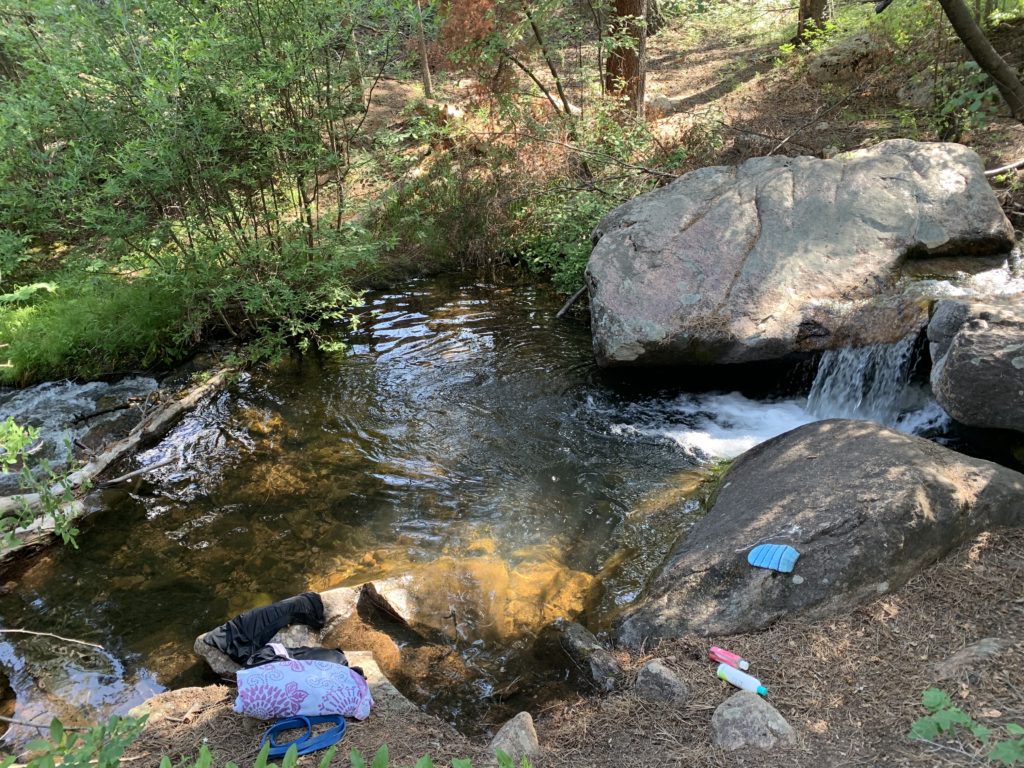
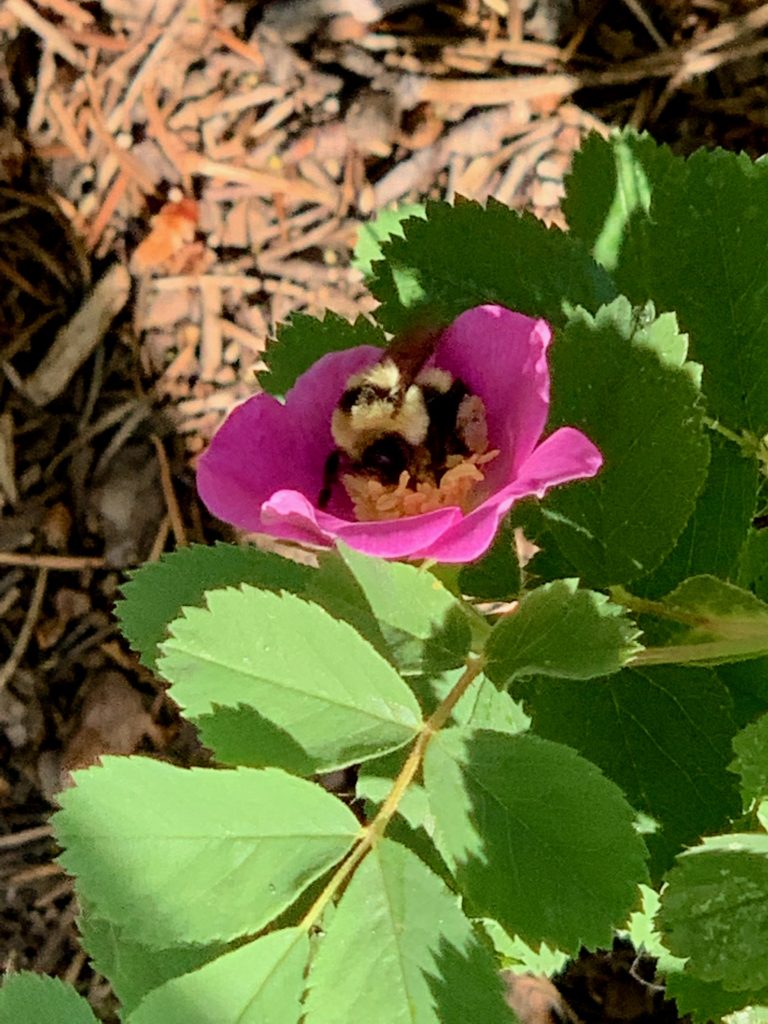
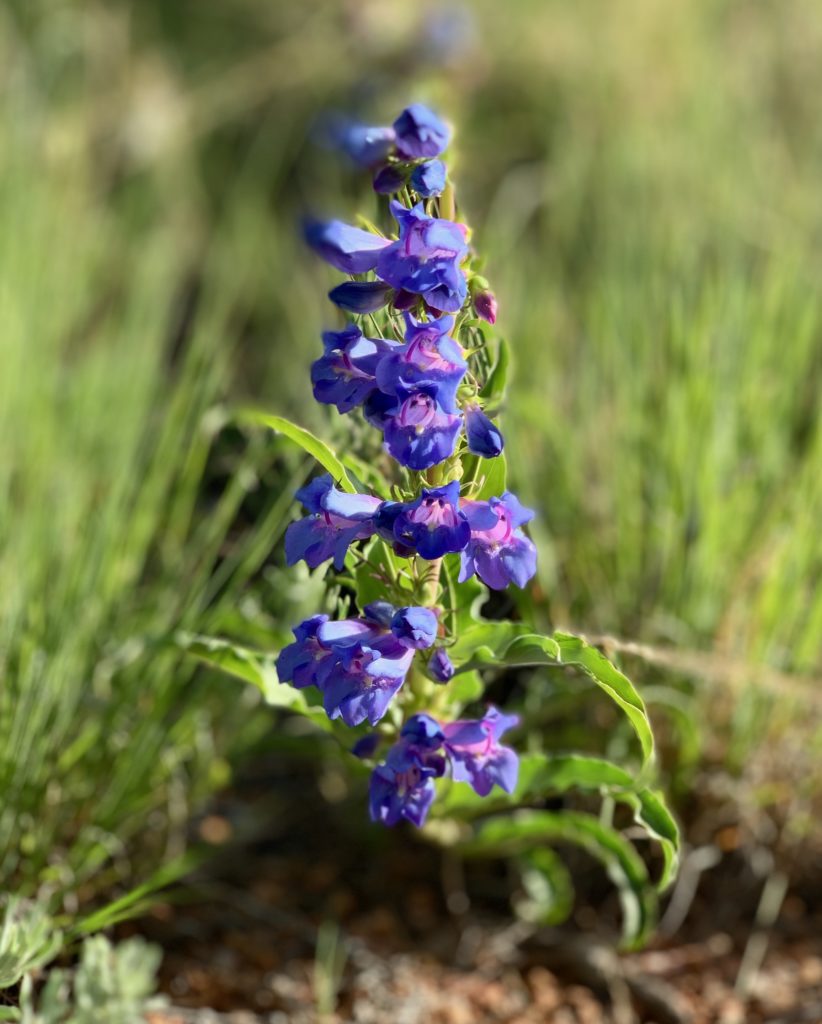
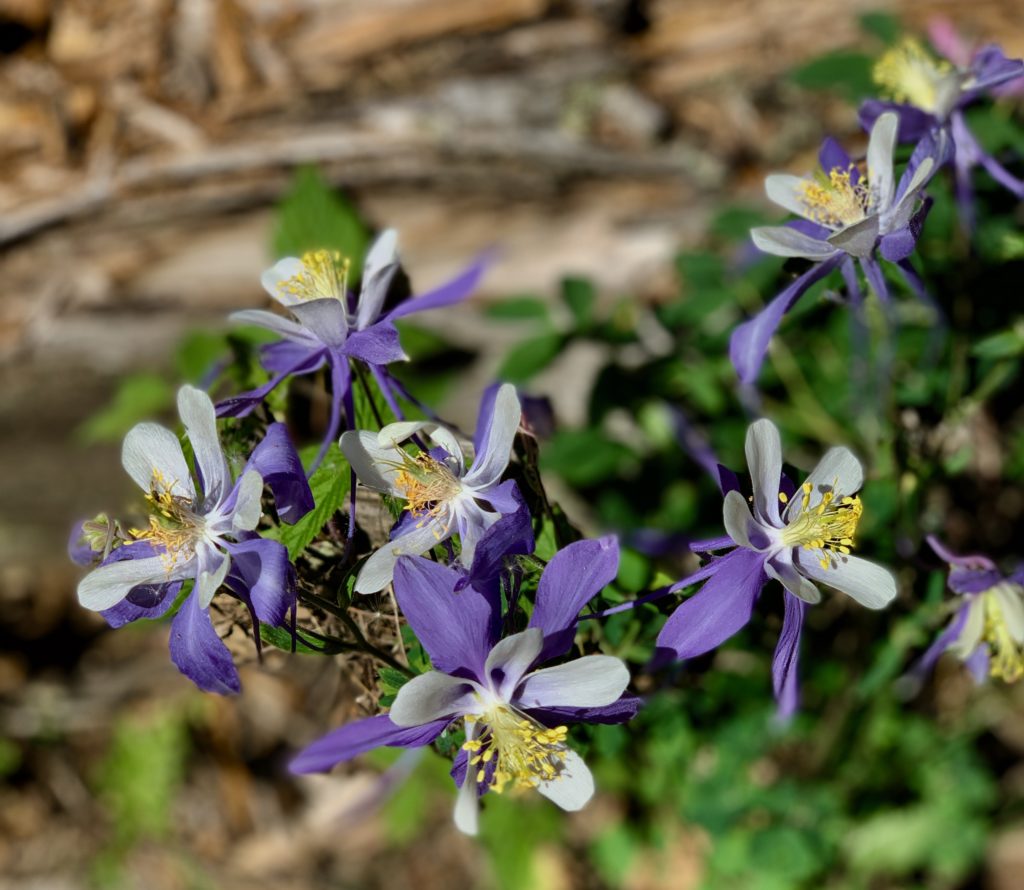
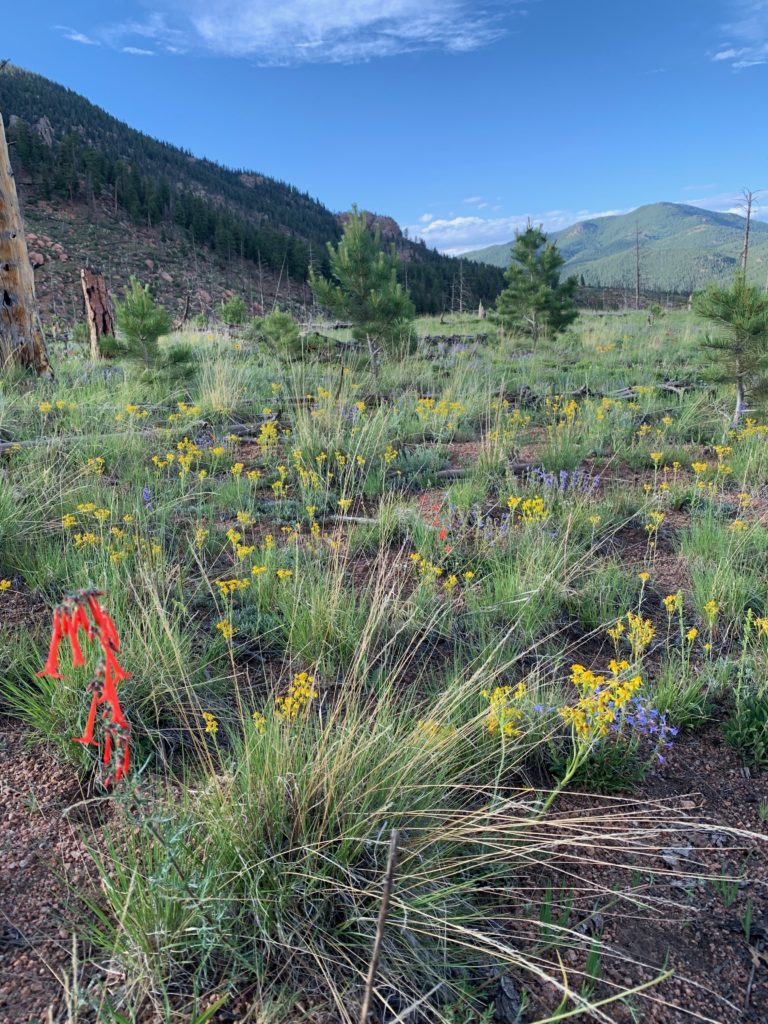
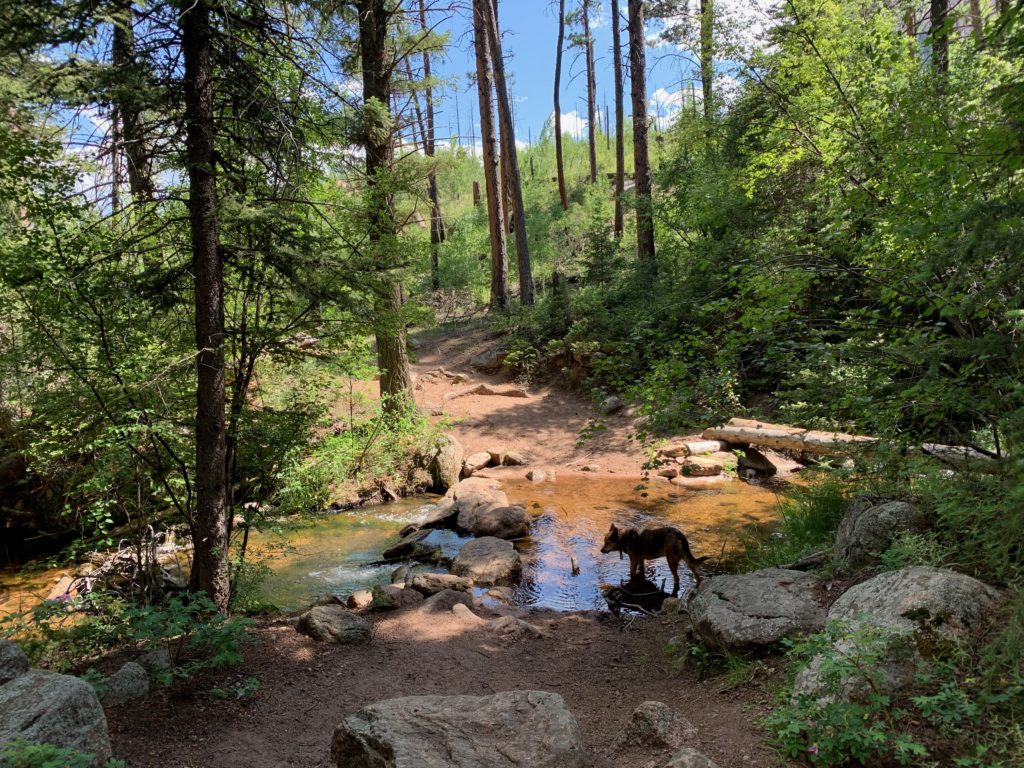
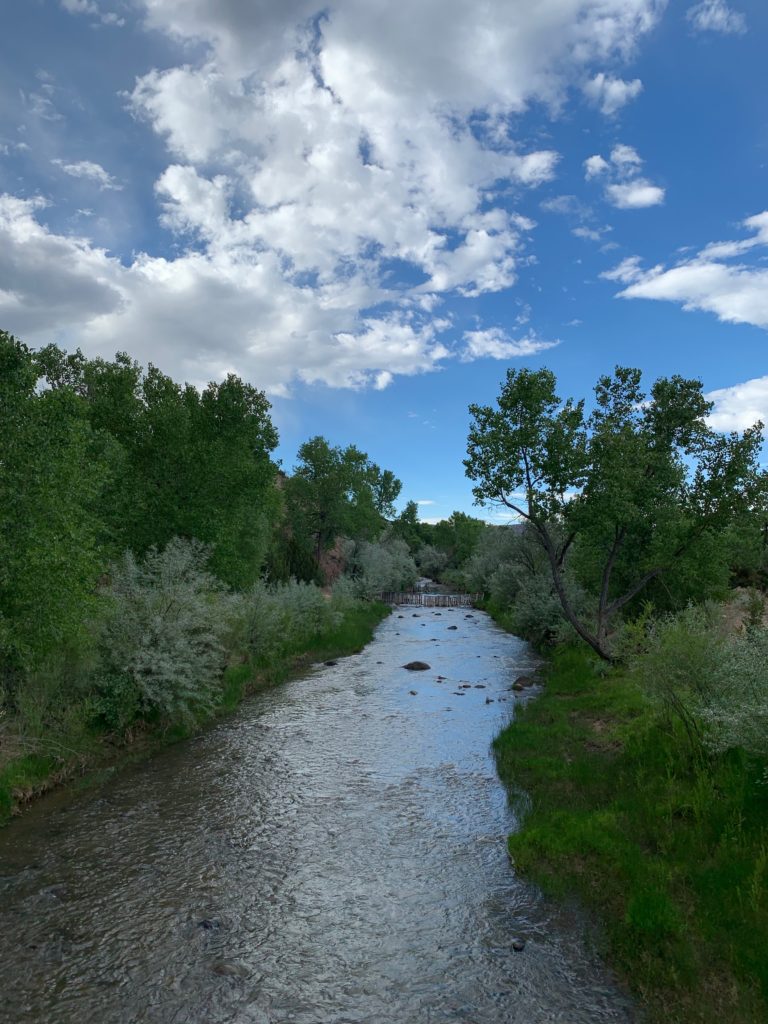
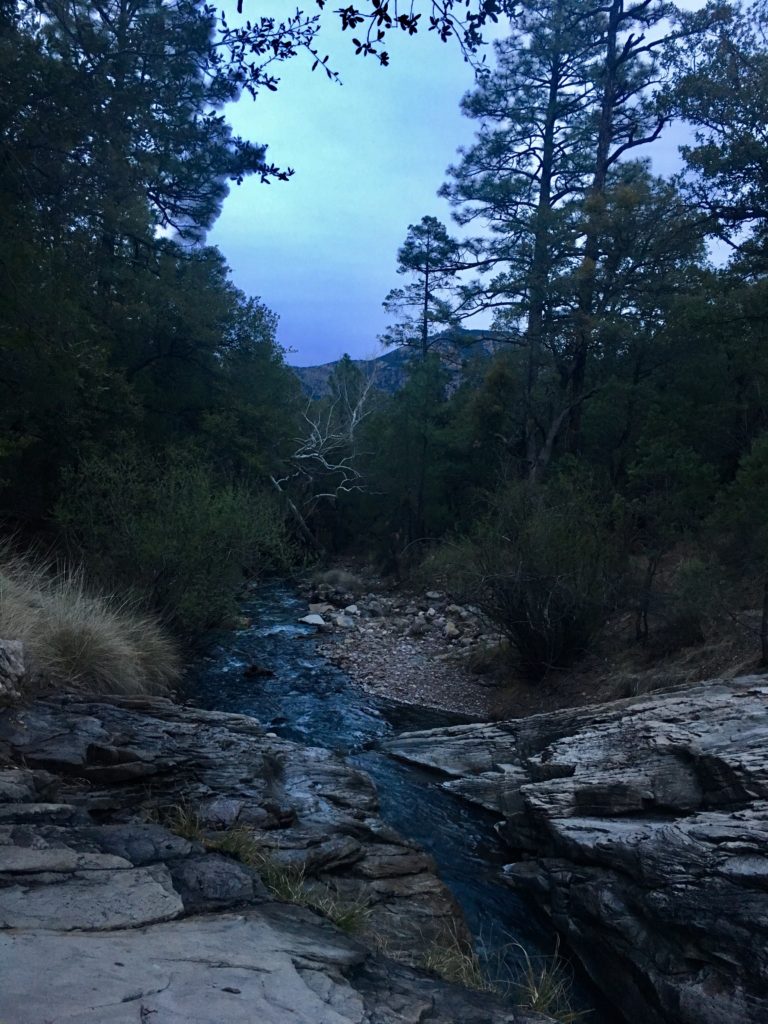
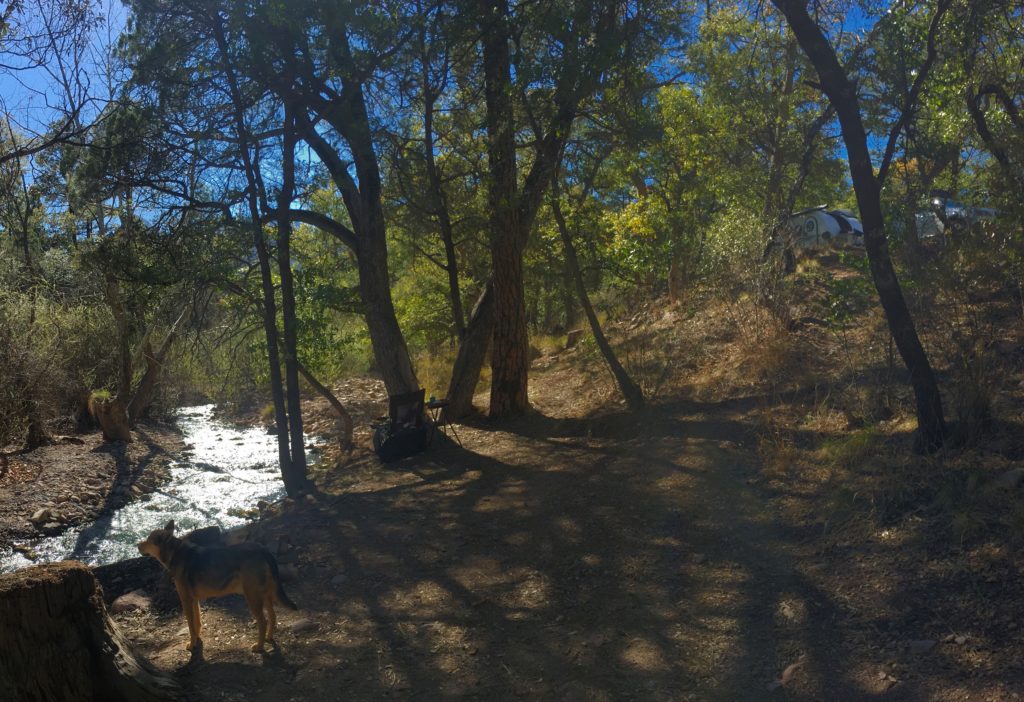
Fourmile Creek gently cascades through the thick forest dotted with small alpine tundra exploding with summer flowers.
The idyllic environment nurtures deep and soothing sleep unless the riotous thunderstorms linger. One onerous night I dreamed I was riding in a stagecoach perilously careening around narrow, steep mountain trails. I woke drenched in sweat, the trailer rocking in high winds, thunder exploding into lightning. There was no calming Rocky in that storm, but I was grateful for his distraction from my own time travel dreams.
Hiker’s Paradise
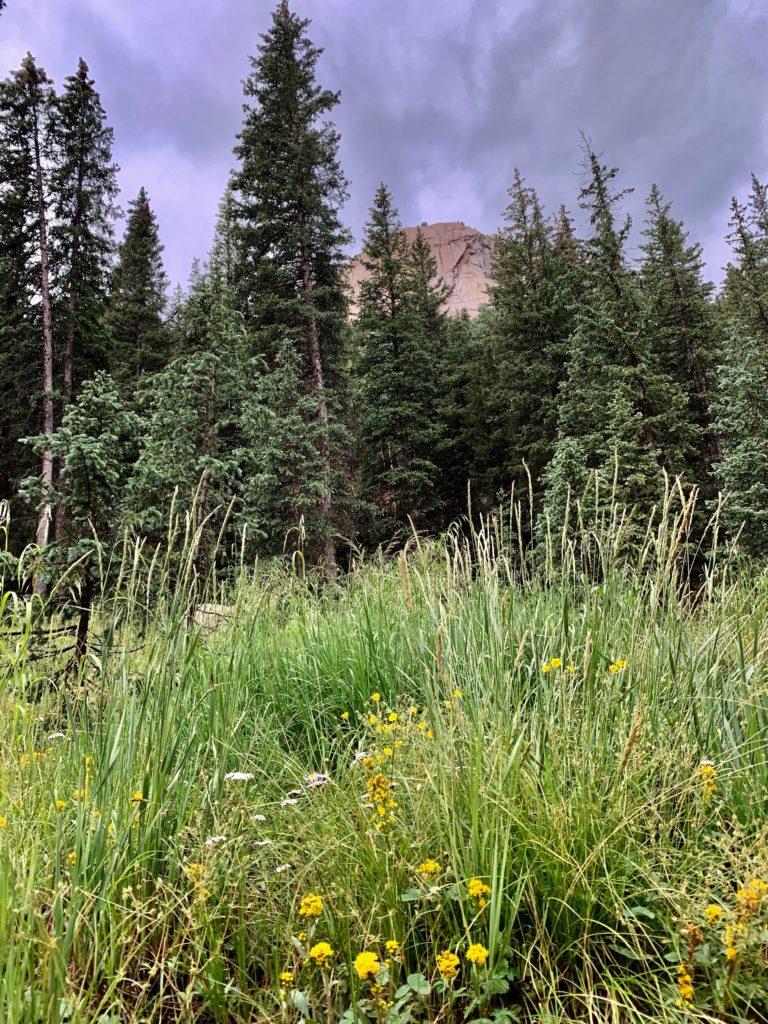
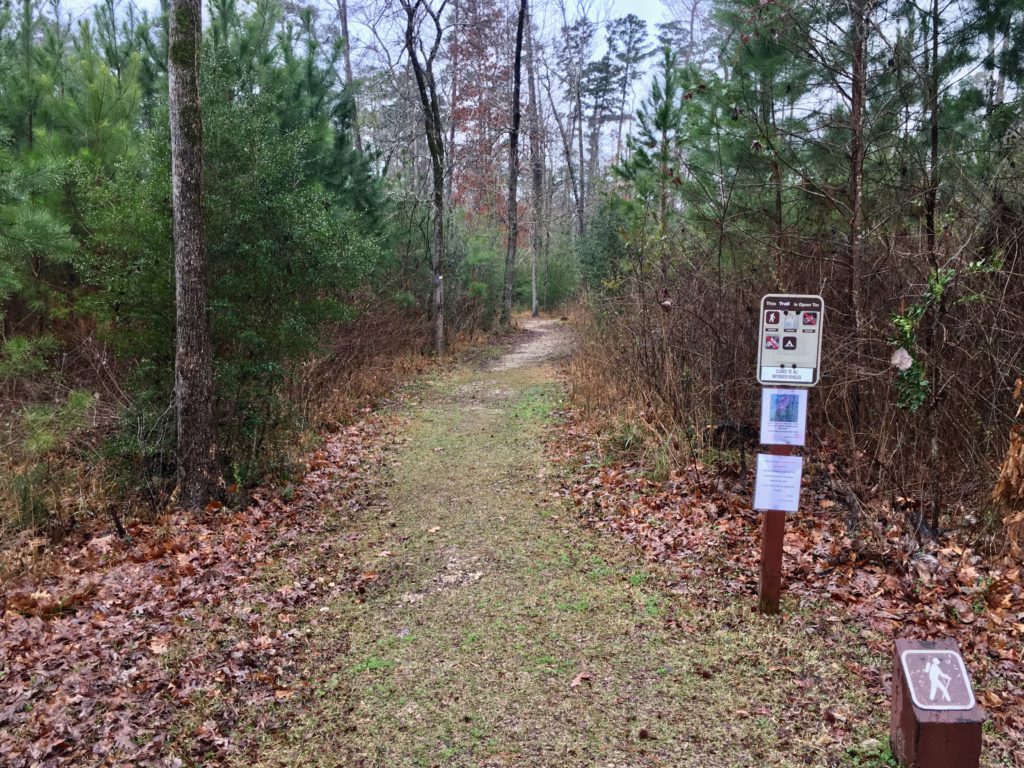
Three hiking trails will satisfy all skill levels. The Crags Trail #664 climbs over 12 miles and 4,000 feet of elevation gain to the summit of Pikes Peak with a newly-rerouted spur Devil’s Playground Trail #753. The design is less vertical and more horizontal with long, winding switchbacks to avoid erosion and make the journey on harsh grades of the fourteener trail easier on hikers.
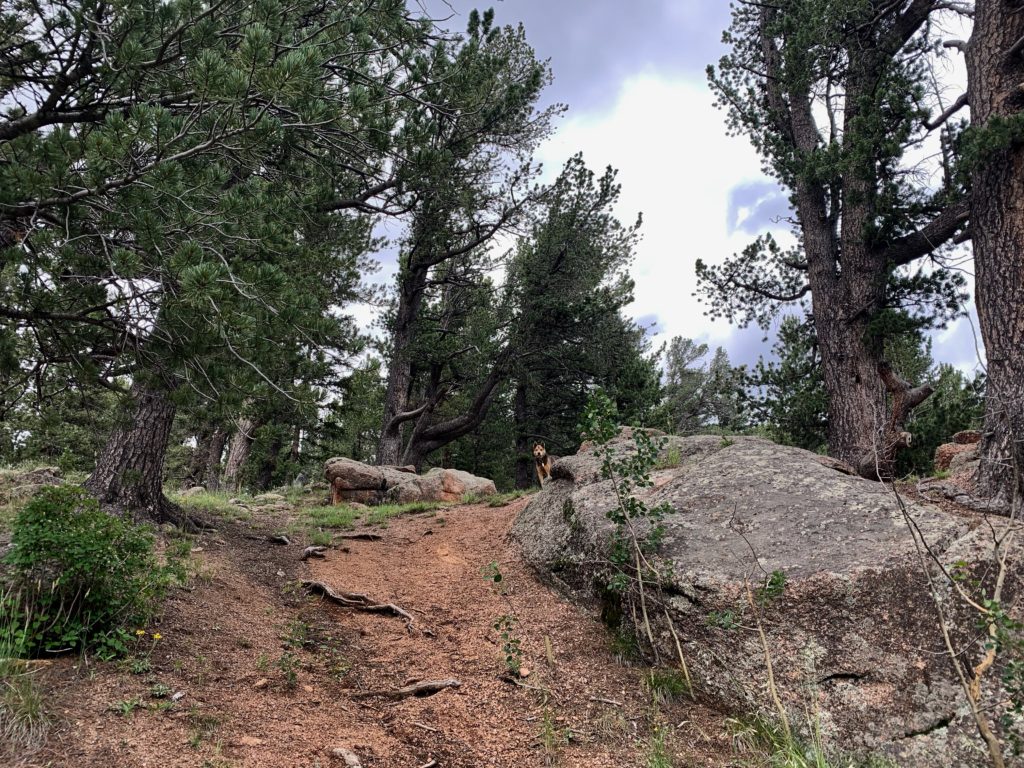
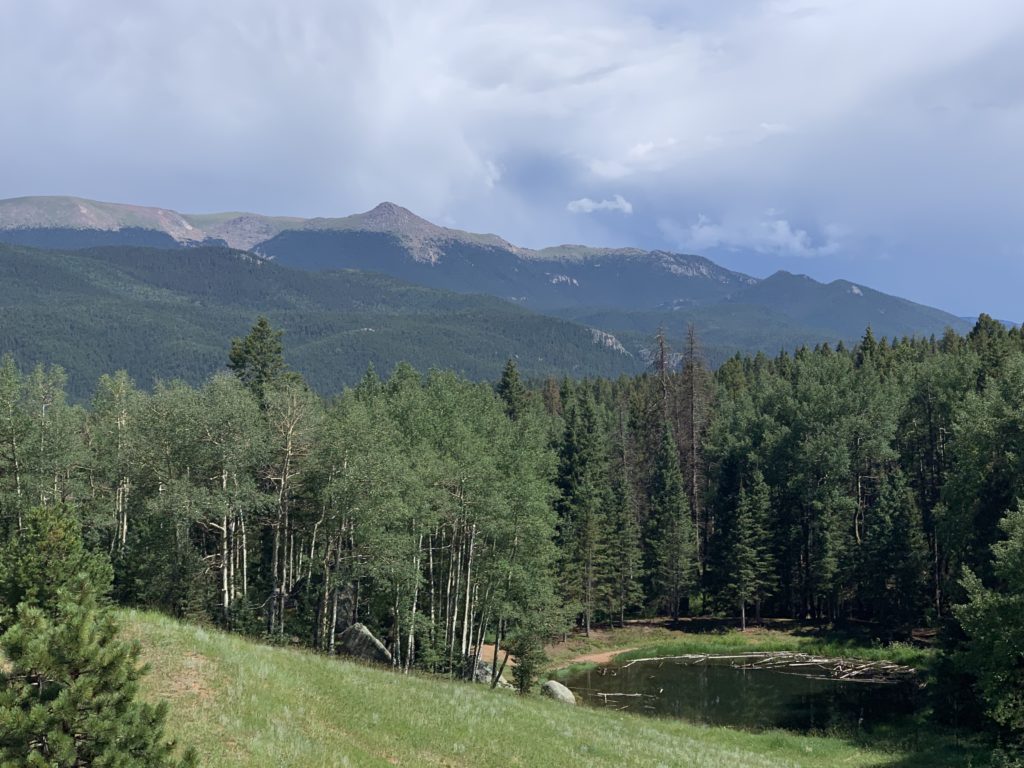
The Putney Gulch segment of Ring the Peak Trail is also located near the campground. A nearly 360-degree view of the Sangre de Cristo and Collegiate Peaks mountain ranges and North Slope Recreation Area reservoirs rewards hikers.
Access to Gold Medal Fishing
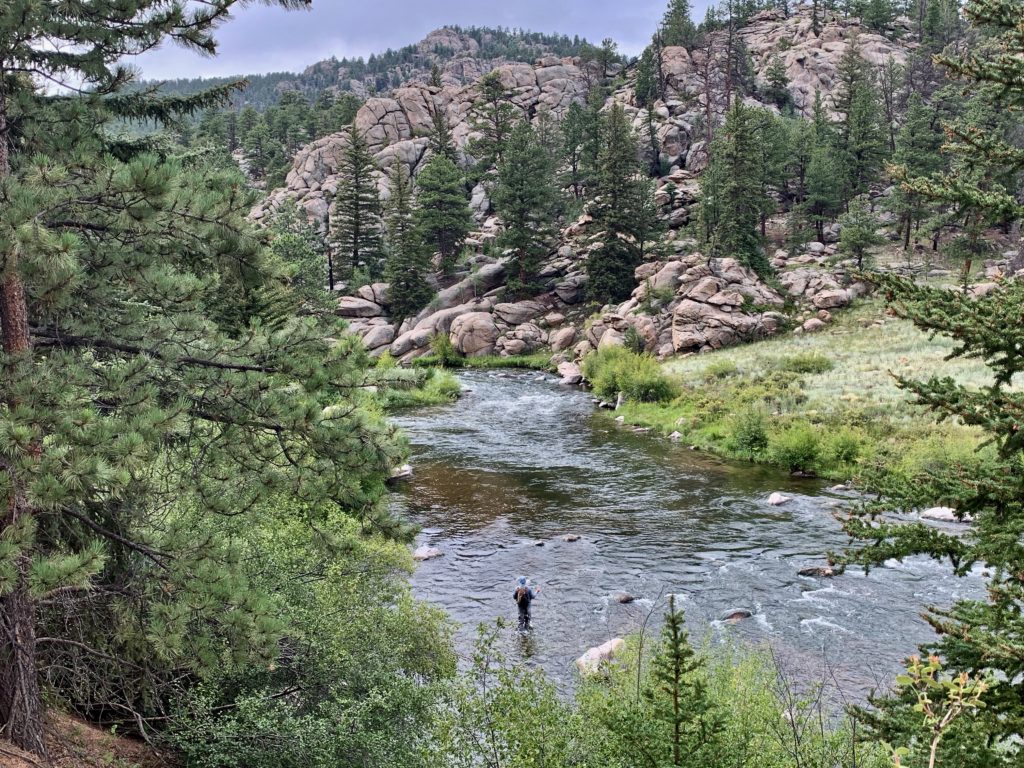
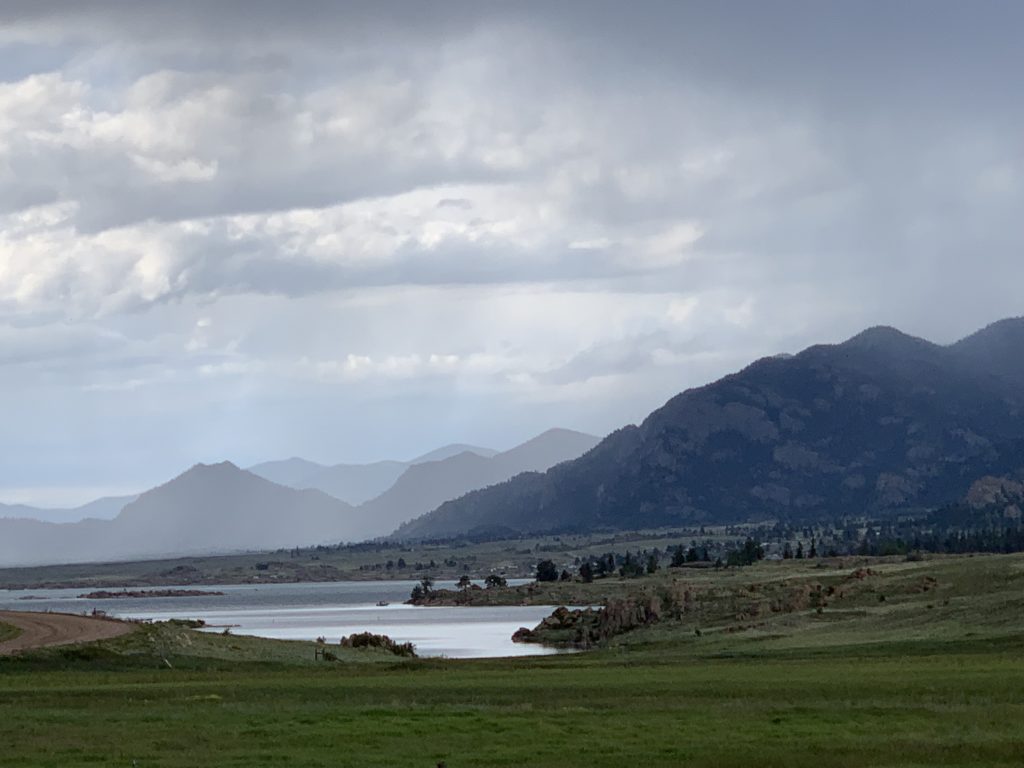
Fly-fishing is less than an hour southwest via US-24 W and Co Rd 96. The popular and highly pressured South Platte River running through the scenic Eleven Mile Canyon will test your skill. If that’s not enough, Eleven Mile Reservoir is above the dam before the canyon on CR 92.
The Crags Campground Specs
The Crags Campground site was designed for tents and small, rugged, RVs and trailers. There are no modern conveniences or electric hookups. There are pit toilets, potable water spigots (the high mineral content can be hard on the stomach), fire rings, and picnic tables. No trash service is provided at the campground, so everything packed in must be packed out.
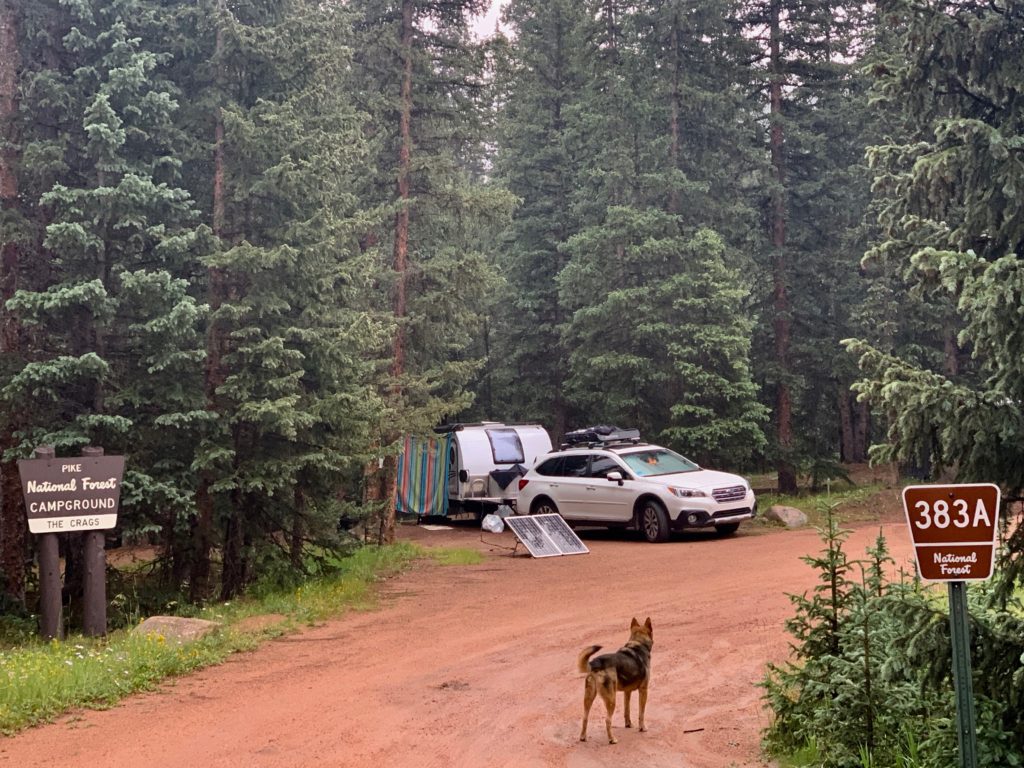
There are also no giant RVs crammed next to each other.
Reservations are not accepted in this first-come, first-served only campground managed by the Pikes Peak District of the U.S. Forest Service contracting with concessionaires to operate the site. Fees are $18/ night although Golden Age and Access Pass holders are usually 50 percent off – depending on the contractors.
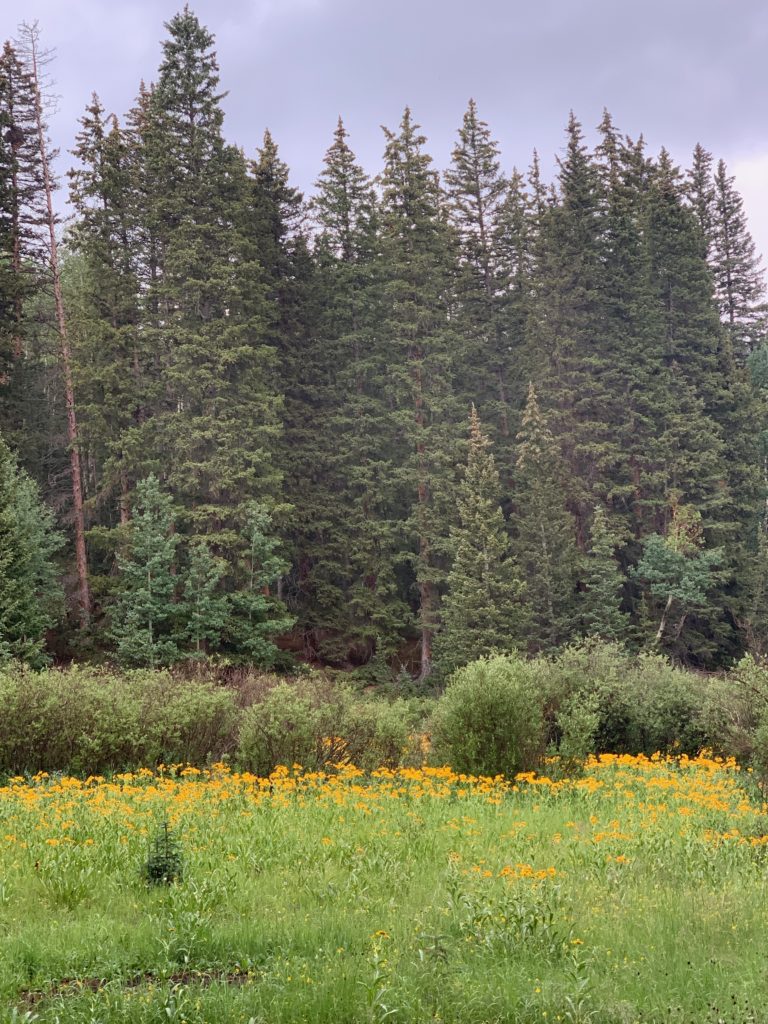
This wild western side of Pikes Peak gets the most snow, so the season is relatively short and wet. Camp opens Memorial Day and closes the end of September – weather permitting.
Dispersed Camping Available in Pike National Forest
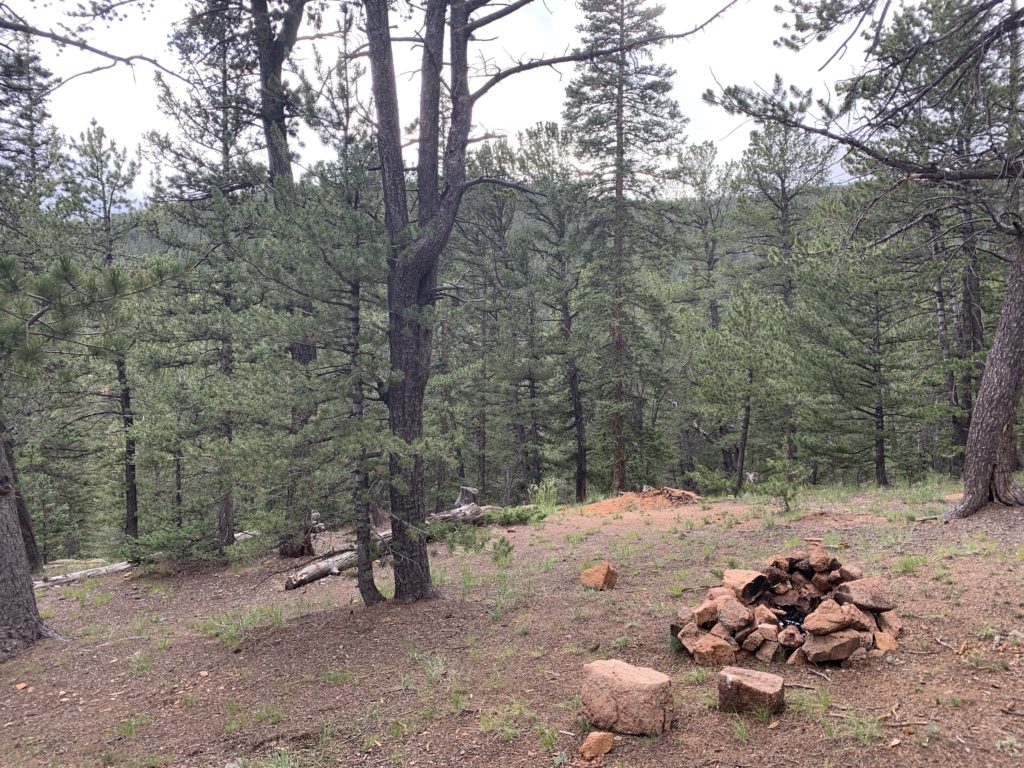
Pike National Forest surrounding Crags Campground has free, dispersed, backcountry camping sites close to the trails but these may or may not be closed depending on the latest conditions and behavior of campers.
Please follow Leave No Trace rules for backcountry camping. It’s definitely an honor code you can live with if it helps keep the backcountry open for everyone.
Motorized vehicles are not allowed in wilderness areas or these hiking trails. Transportation is by foot, paw, or hoof only.
Directions
Crags Campground is tucked into the forest below Pikes Peak east of Mueller State Park. The bustle of burgeoning Colorado Springs seems a universe away even though it’s just over an hour’s drive on a good highway. (Other than the 3.5 final section of very rough forest road.)
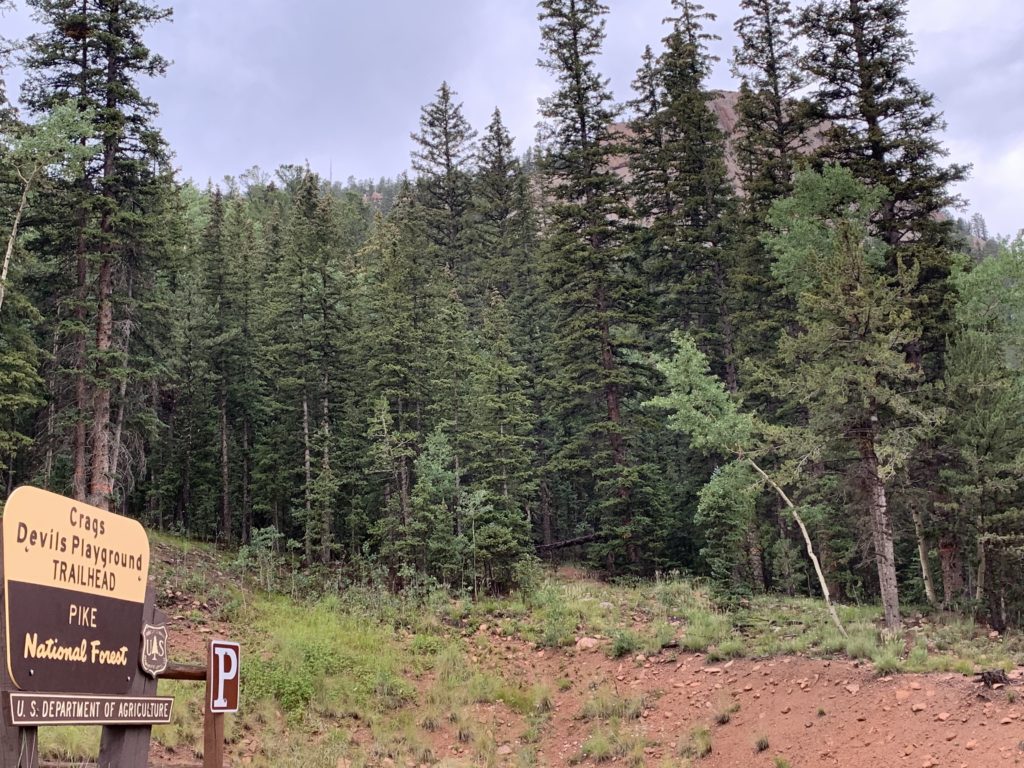
From Colorado Springs, take U.S. Highway 24 west to Divide. Turn left on Colorado Highway 67. Drive 4.3 miles south and turn left on Forest Road 383. Drive 3.5 miles to the east to reach the campground, which is 1/8th mile beyond the large parking area for the Crags trail.













 impact seemed to be loss of Eyesight system that’s the “
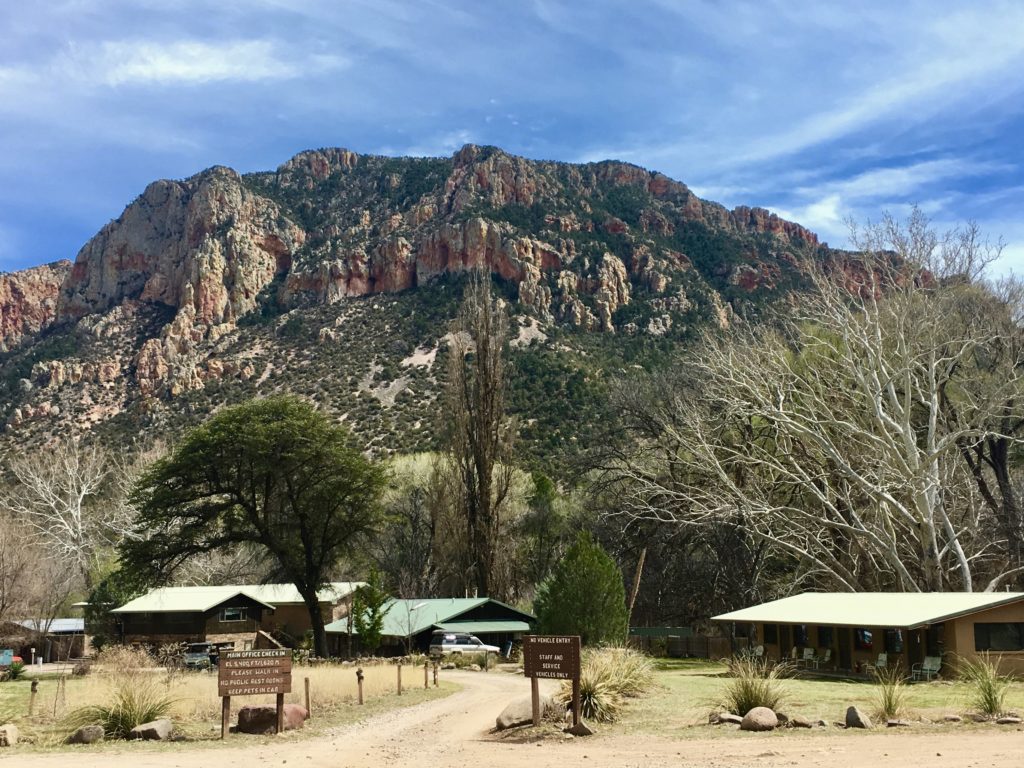
 I arrived late in the day to the remote, mountaintop Upper
 Retired from a life of rodeos and barebacking Corky is a true cowboy with powerful, rugged features, good manners, and a helping hand if needed. He popped out of nowhere to assist my trailer backing before building a warm fire while I set up camp.
 I don’t do campfires in the west because of fire hazards and I’m lazy. I know the tending required to have a safe fire and I’ll not risk a forest fire for food and warmth unless absolutely necessary. I have a propane stove to cook and a dog for cold toes.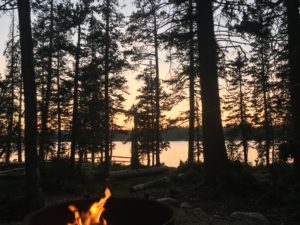

 You have to want it to get it. Take HW 14 east out of Shell, Wyoming for 17 miles through the Scenic Big Horn Highway then exit forest road 17 and go south 24.5 miles. Plan on two hours to drive that short 24 mile distance through some of the country’s most inspiring offroad vistas. There’s no cell or tow service.
 It always baffled me that herds calmly move to a cowboy’s request. Not anymore. I’m far too independent for herds but being looked after by somebody who takes his job seriously in the sometimes perilous outback is a gift I gratefully accepted. So did Rocky.
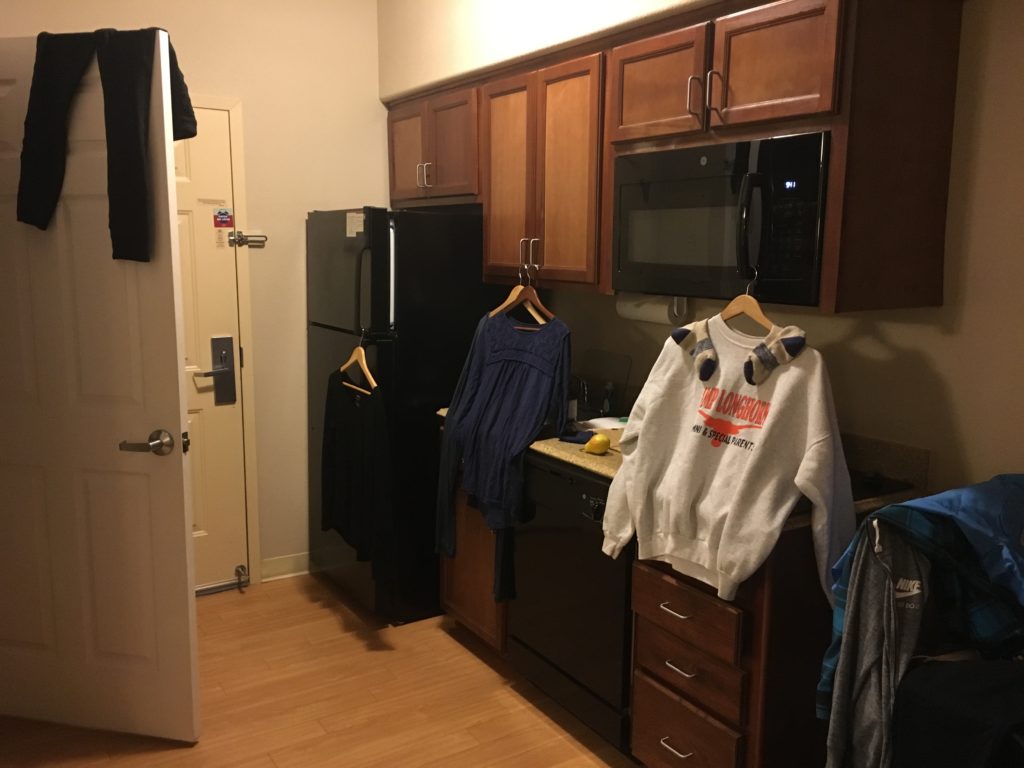
 My extensive travel does not have nor require a big budget. Paid lodging is a rare treat strictly reserved for a hot soak in a deep tub, laundry, and supplies. The anxiety over these unexpected expenses has been eased by the miracle of the folks crossing my path like family friend AJ and her Indian Gulch Ranch. It reminds me that everything works out better than I could imagine if I just stay in the flow.
 Kathy at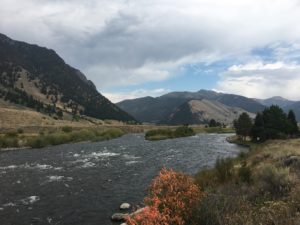

 Watching Rob work the boat into just the right spot then hold it in the current so my line would sweep perfectly through a drift was impressive. Nothing to write home about in size but plenty of action with the small, less experienced fish.
 yearned for the smaller streams and relaxed ease of outback fly fishing where larger fish are more likely to play.
 Rocky and I picnicked at a boondock site an hour off HW 287 on FR 202 of the West Fork of the Madison. We spied the shallow, swift water sweeping beside the small pine meadow in a valley just when hunger couldn’t be denied any longer.
 to scout a campsite nearby and had come off the mountain at dawn with big plans to celebrate his first anniversary with his new bride and their young son.
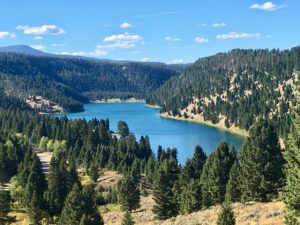 An hour or so on down the road a cyclist was stopped and I slowed to confirm he and his retro 1970’s Harley were ok. A bit later I moved on with even more secret fishing spots in the gorgeous “Chain of Lakes” and smaller West Fork scribbled in my notebook. Unfortunately there was not nearly enough daylight to keep going especially when I was nearing the end of my week near Ennis, Montana and my car still wasn’t ready.
 Madison Management Kathy stepped in once again and knocked it out of the park with a cabin very much like the boondocking sites I love the most. Behind a locked cattle gate on a wild pristine stretch of the Madison River with a side stream enveloping a small
 island the cabin and the imprints of lives well lived raised the hair on my body in a most pleasing way.
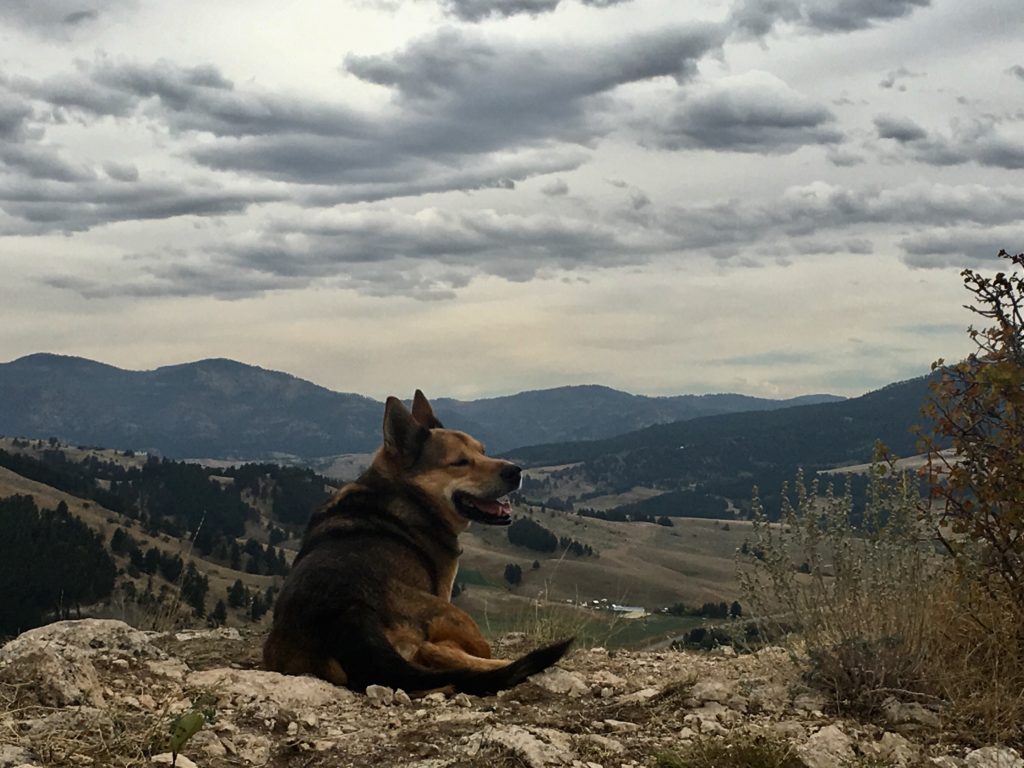
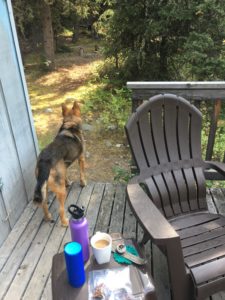 The first two days Rocky guarded every exit from the house sticking right by my side even when I walked to the car. He’s had enough outback experience to know we stick together with this much wildlife around.
 By the third day we had explored every inch of land and water in this enchanted stretch. In fact, the week we were there we never left the property, never unlocked the gate, and never once had a desire for any part of life beyond the gate.
 Montana believes water is public so there’s none of that blocked access to private waters nonsense you find in other states. Every couple of days a savvy fly fisher would wade up the back side of the island where the slower stream flows in front of the cabin and I could get a fishing report to compare to my own.
 I also had an extraordinary visit with the woman who grew up on this stretch and raised her kids there too. Kindred spirits we both know how priceless a small stretch of outback fresh, cold water can be for generations of family and friends. I cherish that visit and her amazing rosemary pear preserves.
 I marvel at what we’ve had access to since we left Minneapolis in August. I sense watery images of what awaits us in the secret places we’ve yet to explore.
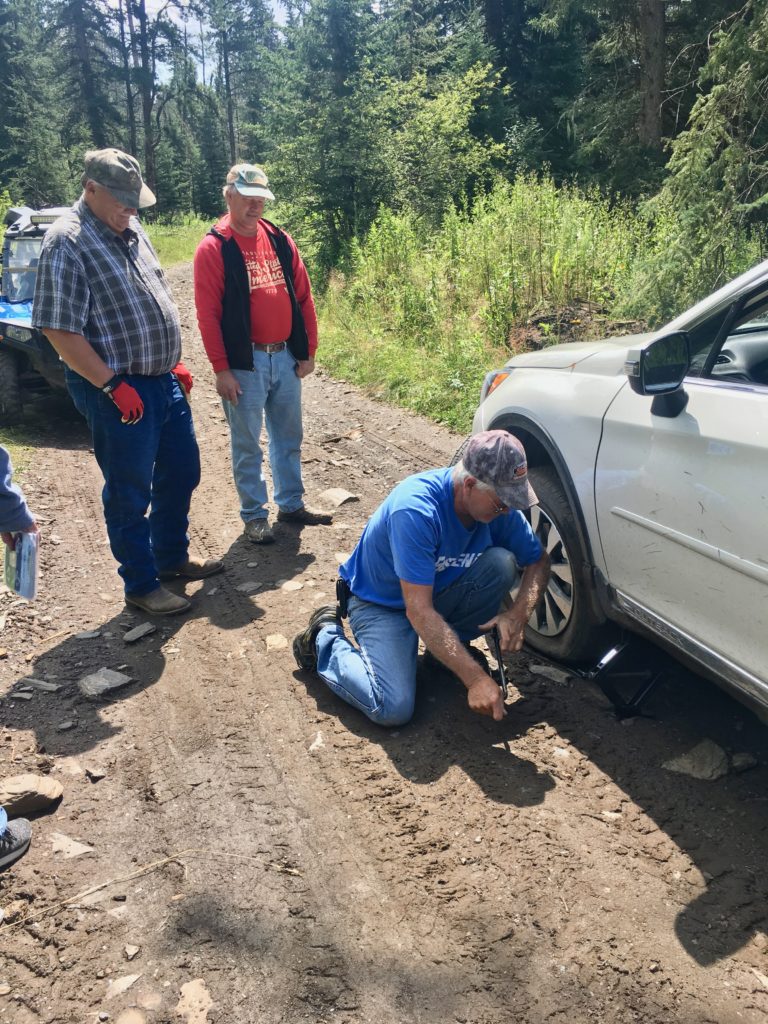
 My heart and my budget need my rig back. I’m questioning the wisdom of Subaru playing a leading role in my outback, offgrid life. Looks good in the commercials but at just over 30,000 miles my reliability and service experience is taking a huge hit by sitting in the shop for a month. That breaks a bottom line survival rule for a solo, outback, offgrid nomad and her dog and smells an awful lot like a lemon.